


Some journeys are about reaching the finish line as quickly as possible; others are about having the courage to pause, recalibrate, and return stronger. Pragya Chaudhuri’s story is one of determination, growth, and trusting the process.
A proud alumna of DPS Megacity, Kolkata, Pragya built an impressive academic record, securing 96.75% in ISC, topping her school in History, Political Science, and English, and earning a place among just six students across India to score a perfect 100 in ISC English. Beyond academics, she is an avid reader, photography enthusiast, film lover, and someone who enjoys exploring new ideas and perspectives.
After school, Pragya made the bold decision to take a drop year and give CLAT her all. With dedication, consistency, and the guidance of CLAT Essentials, she transformed that extra year into an opportunity for growth and ultimately secured her place at WBNUJS, Kolkata, where she now pursues B.Sc. LL.B. (Hons.).
In this interview, Pragya reflects on her preparation journey, the lessons she learned during her drop year, and the mindset that helped her turn ambition into achievement.



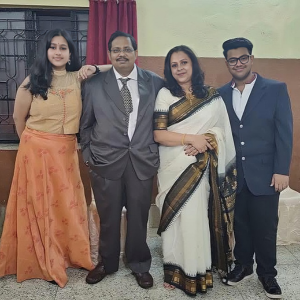

Q. Congratulations on your outstanding achievement. Could you share your immediate reaction upon receiving the news that you are joining WBNUJS, and what this success signifies for you personally?
Thank you so much! I was expecting much higher marks when consulting the answer keys released by prominent CLAT coaching centres. But the provisional answer key was a different story. The first list I was met with disappointment and was preparing for other options. But the 2nd list changed my future. I checked it at 1pm, even though it came out at 11am, only after I got a text from a peer saying “Congratulations”. I was alone when I checked, I didn’t even smile when I got the news, I just numbly stared at the screen until my mom came into the room asking me if our situation has changed. That’s when I just started crying. For me, everything I was too afraid to even dream about came true.
Q. What motivated your decision to pursue a career in law?
I was told from a young age that I am great at arguing and I should become a lawyer. But I somehow got roped into the doctor dream, as many Indian kids do. I was prepared to take up science again but financially, it was not feasible for us to pursue a future in medicine. Law was a practical choice for me, but a happy one. It felt like destiny. My logical to a fault characteristics and I never looked back after that.
Q. Could you outline the daily routine you adhered to during your preparation? Specifically, how did you structure your day to ensure effective study hours versus necessary breaks?
I usually have difficulty in getting started but once I sit down, I can study for 8-10 hours in a stretch. So, from May-October, I would study from 3pm to 10pm, taking a break of an hour for dinner and then again from 11pm-1am. Some days I would just set an agenda for the day and if I was done with it early, I would reward myself. This positive reinforcement helped me focus to get things done quickly so I won’t get frustrated or burnt out.
Q. The decision to take a drop is rarely easy; there’s societal pressure, self-doubt, and uncertainty. How did you mentally prepare yourself for the drop year before it even began? And how did you know it was right for you?
For me, the decision to take a drop was expected. I was met with grave personal tragedy in September of 2023 which greatly affected my mental psyche and hence, affected my performance in December 2023. I knew that the person who gave CLAT 2024 was not who I am. I knew I was lacking guidance, so I shifted coaching to join Clat Essentials. I took a nice break after March 2024 when my board exams ended and came back to my preparation with a fresh mind and a new mentor.
Q. Did your study routine evolve as the exam date approached, particularly in the final month? How did your strategy in the last 30 days differ from the initial phase of your preparation?
The final month I woke up, I studied, I ate in between and I slept. That is all I did. My entire day was focused on revising and analysing. Clat Essentials’ revision GK quizzes were especially helpful as my GK was weak. I had made notes for all of the GK topics my mentors had given us, so revision was also easy. I practiced QT for two hours every day, but that was the same as the previous 6 months. That last month, I gave my all so that I would not have any regrets no matter my result.
Q. The preparation journey is often long and arduous. How did you navigate periods of burnout or suboptimal performance in your mock tests to maintain your momentum?
I don’t think I was ever discouraged after a poor mock paper, as I would analyse it as taught by my mentors, clear up my doubts, and made sure that I don’t repeat that mistake again the next mock. Mocks were always an opportunity to learn and analysis was made fun by doing it with my friends.
Q. CLAT is distinct for its high-pressure, speed-intensive nature. How did you manage exam-day anxiety, and did you utilize any specific techniques to maintain composure during the test?
On D-Day, I had to travel 15 kms in Auto because of traffic. My mom and I dubbed it as my bad luck getting over for the day so my exam would go better. This incident significantly calmed me down. Once I sat down in my centre, I did some deep breathing. When the paper came, I noticed my hands were shaking so I set my pen down, closed my eyes and forced my head to get clear. Then I did not think of any arbitrary things and just drowned myself in the passages, knowing it was my last time suffering through them.
Q. With the abundance of study material available, could you list the primary resources, books, periodicals, or platforms that you found most indispensable to your success?
My weakest section was GK so Clat Essentials’ list of GK topics was priceless to me. I would painstakingly create notes on every single topic (this was before AI, btw). This was possibly the best thing, as it is much more difficult to read from someone else’s notes. My logic section was significantly improved by solving GMAT questions. Aside from this, the books provided by Clat Essentials helped immensely.
Q. How instrumental were mock tests in your overall preparation strategy? Specifically, how did they aid in your conditioning for the actual exam environment?
I ended up giving so many mocks that even the exam felt like one. That’s the goal. As a person with bouts of anxiety, this helped a lot. But analysing your mocks are the best way to prepare. If you didn’t actually learn from your mock, it was pointless.
Q. Beyond merely attempting mock tests, how did you approach the post-test analysis? Did you maintain a systematic record of errors to track your improvement?
Yes, keeping a track was essential to actually remember what to improve and then work towards improving it.
Q. Given the vast scope of General Knowledge and Current Affairs, what methodology did you adopt to stay updated efficiently without feeling overwhelmed?
Clat Essentials actually just did this part for us. By making us retake every single GK quiz we have ever taken at the end made revision extremely easy. In November, at the end of the day, I would take 1 hour to choose a random GK Topic and try active recall. I also looked at the topics part by part as CE gives them, which made it less overwhelming.
Q. Time management is critical in a 120-minute examination. Could you walk us through your section-attempt strategy?
I start with GK, it is the quickest as you don’t need to read the passages (unlike our paper). Then I solve QT as you need a fresh mind for that. Then I would oscillate between Logic, Legal and English. Anything that felt too difficult, I would mark the page and come back later. This way, you don’t have one specific section left. This ensures you get the easy marks up.
Q. In hindsight, is there any aspect of your preparation strategy that you would alter or improve upon if given the chance?
I would have picked up the pace in May June, I took those months too lightly. This would have reduced my burden in November, which should be the month only for revision, ideally.
Q. How did you approach your second attempt differently — strategically, mentally, and in terms of resource selection?
My second attempt was totally different from my first as I had Clat Essentials now. Their mentorship and guidance was exactly what I needed in my CLAT journey. Their resources and their way of approaching a subject was perfect, especially in GK and Logic. Mentally, I just wanted to do my best and have no regrets.
Q. Did you take up any dedicated mentoring support, and how important do you think one-on-one mentoring from experienced educators is in shaping a student’s CLAT preparation?
One-on-one mentoring is irreplaceable in shaping a student’s CLAT preparation. I was lucky to have dedicated and personal support from my mentors at Clat Essentials. I knew I could reach out to them in case of any doubts and they would actually explain the topic to me a thousand times so that I could get it. You will never get this from a coaching with huge batch size.
Q. The comprehension-heavy format of CLAT rewards strong readers. Was reading always a habit for you, or did you consciously build it during prep — and if so, how?
Reading was always a part of life for me. I read to imitate my mother, a voracious reader. Then, I started to enjoy the escape I got from books. I yearned to be my brother’s equal so I read Shakespeare in Grade 6 as he was reading so in Grade 9. My tip would be to read any type of book that will keep you engaged but to underline any new words you come across and jot down the meaning on the book itself. Set a timer and try to finish one page in that time. Then set it lower and lower to increase your speed. Make it fun.
Q. Having gone through the entire journey yourself, what is the single biggest mistake you see fellow aspirants making that silently kills their rank?
I really don’t know, I don’t think I looked at what others did. I just focused on myself.
Q. How should students prepare for a difficult or unpredictable CLAT paper?
If the paper is unpredictable to you, it is so for everyone else too. You’re all on the same boat. If your basics are well-established then a weird paper actually gives you an advantage. You should never falter while answering, just keep going.
Q. Comparison with peers is one of the most silent yet damaging traps during CLAT prep. Did you ever fall into it, and how did you learn to block out that noise?
I was falling into this pattern at first but my problems just felt so vast that I realised my competitor was just me. I needed to beat out my own doubts. I needed to be better than who I was yesterday.
Q. Based on your experience, what is your primary advice for future aspirants targeting CLAT 2027?
I don’t think I can speak on this since the CLAT paper is very dynamic. I think I would just suggest that you learn to redefine your limits under the mentor’s tutelage. Clat Essentials teaches you lifetime skills which is worth getting even if you don’t get your dream rank and NLU. Have fun while studying; you have to study, might as well enjoy it.
Q. Finally, what is your message to students who are currently weighing whether to take a drop for CLAT 2027 — both those who should take it and those who perhaps shouldn’t?
It’s a myth that taking a drop makes studying for your joint exam easier. It is actually more difficult because now you’re in this final stage, where if you fail, you just fail. No more do-overs. If you can walk away from your drop with a sub-optimal result then only go for it. At the end of my drop, I realised I am okay with even going to a private college if my rank isn’t as good. This was because I learnt things that actually help you in your career; research, quick thinking and discipline. If you have these things in your arsenal then you can succeed in every college as there is a place for excellence everywhere.
A CLAT Essentials Interview by Oyishee Bose