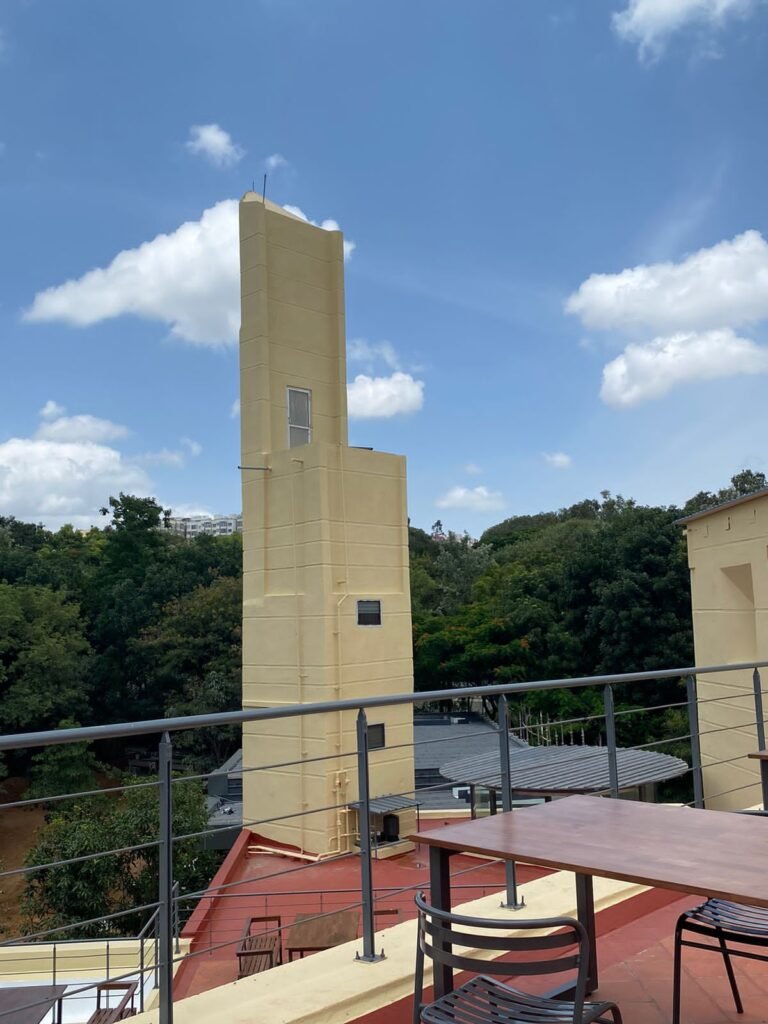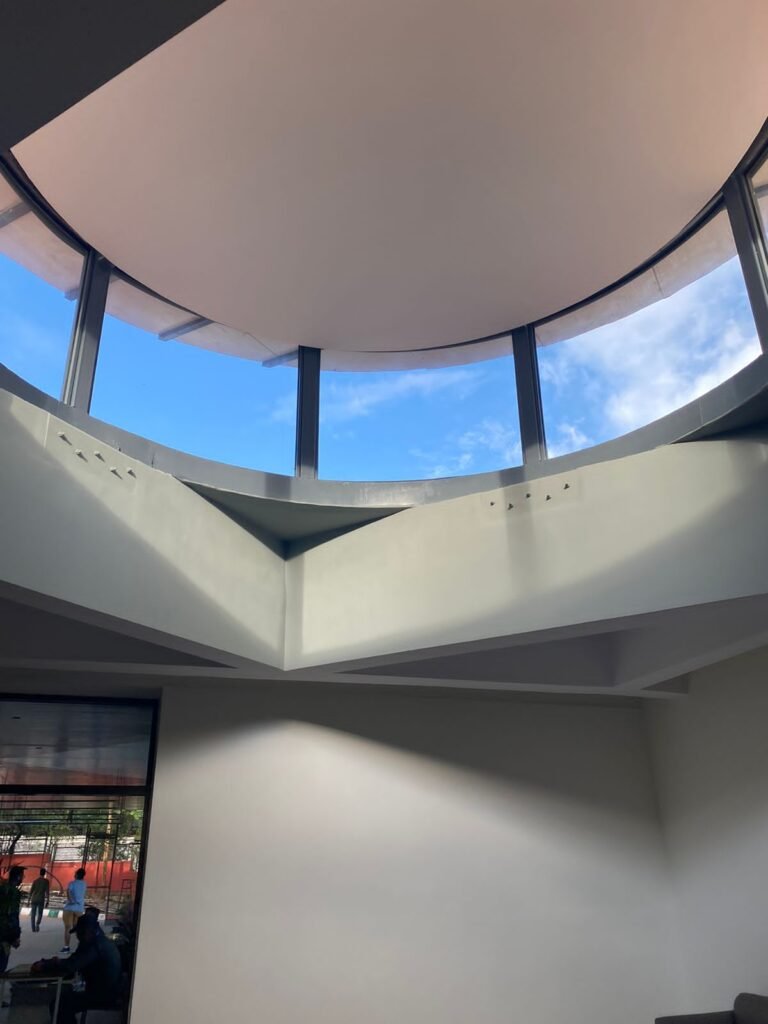
We’re excited to bring you an insightful written interview with SAKSHI NAIR a student of NLSIU’29, who has consistently stood out for their academic excellence, campus involvement, and career trajectory. In this conversation, she shares honest perspectives on life at NLSIU, placements, opportunities, and advice for future law aspirants.
- To begin with could you please briefly introduce yourself and share a bit about your journey so far.
My name is Sakshi Nair, and I’m a first-year student pursuing a B.A. L.L.B. (Hons.) at the National Law School of India University (NLSIU). My journey in law school has been full of ups and downs, but each trimester has added to my growth, especially when I compare where I started to where I am now. The first trimester was particularly demanding, not only due to the academic rigour but also in terms of adjusting socially, building friendships, and managing time for extracurricular activities. However, now in my third trimester, I’ve seen a remarkable transformation in myself. I’ve become more adept at handling the academic load while also making time for other interests.
🧑🎓 Life at Law School
- How would you describe your daily life at law school?
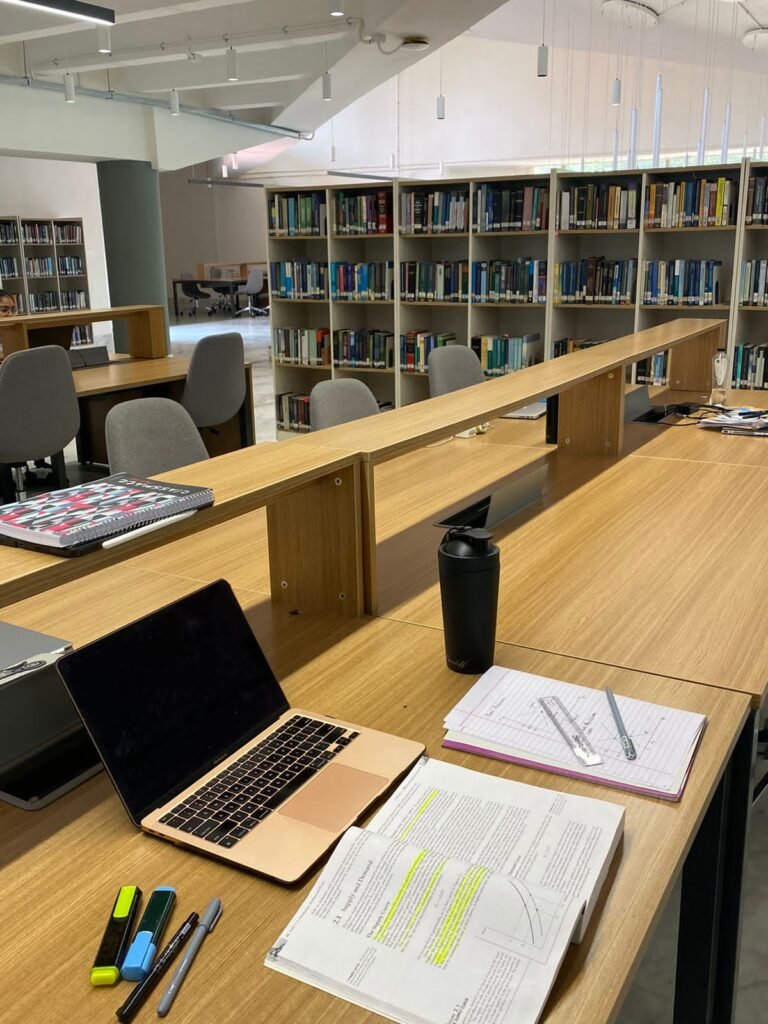
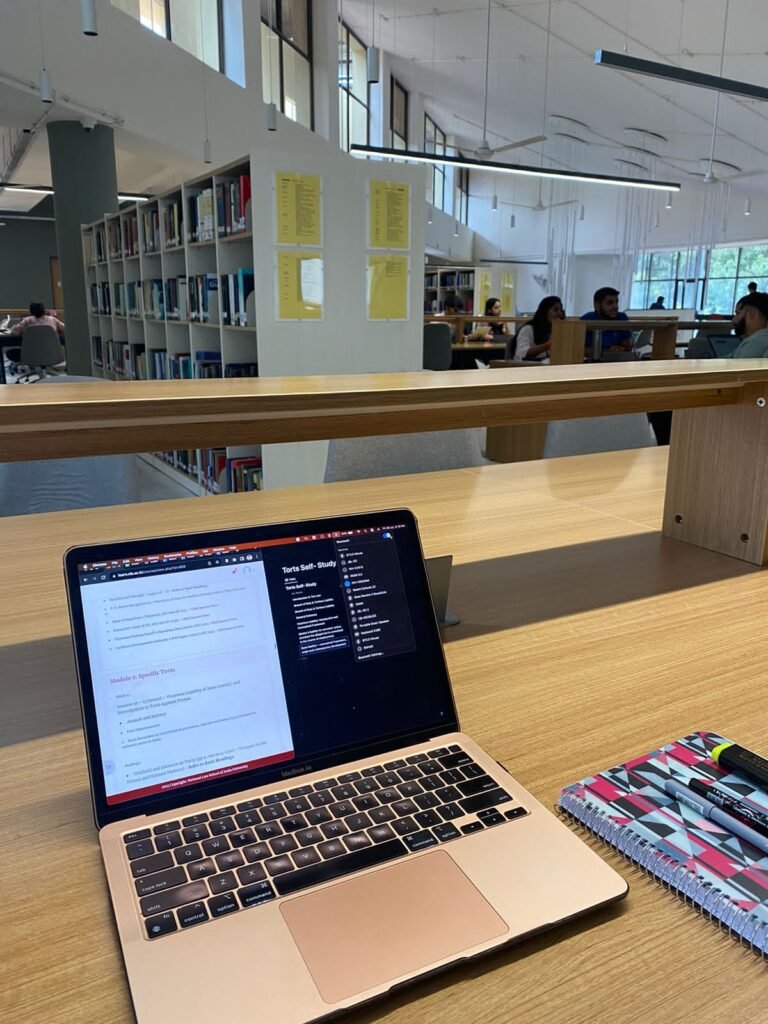
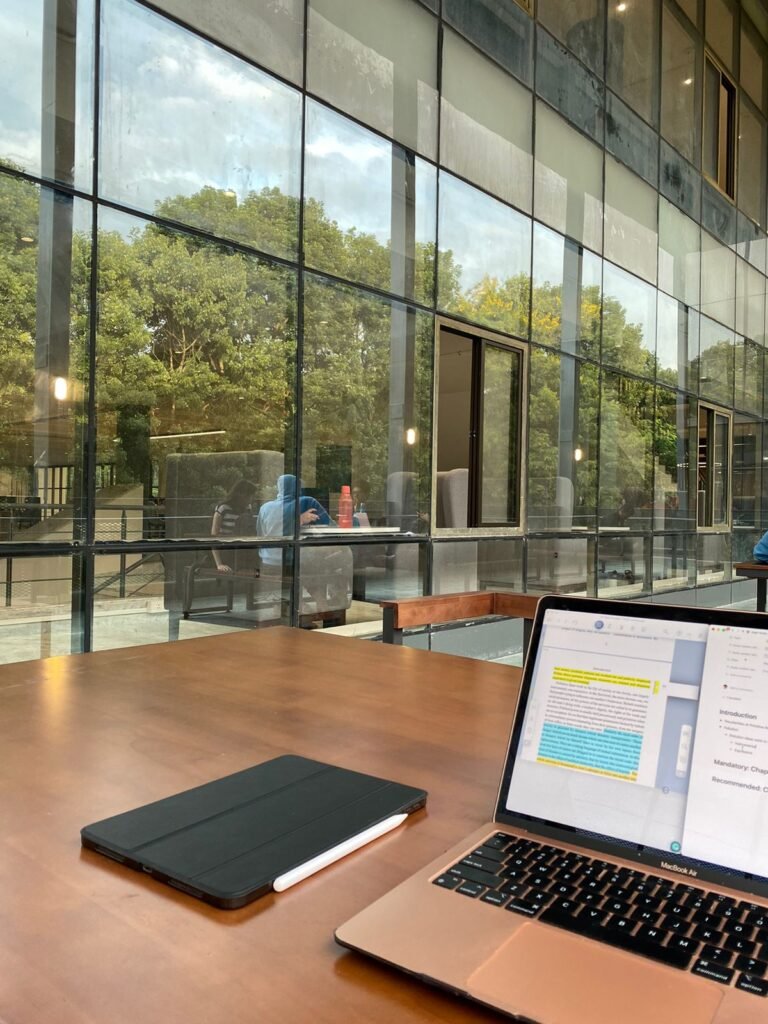
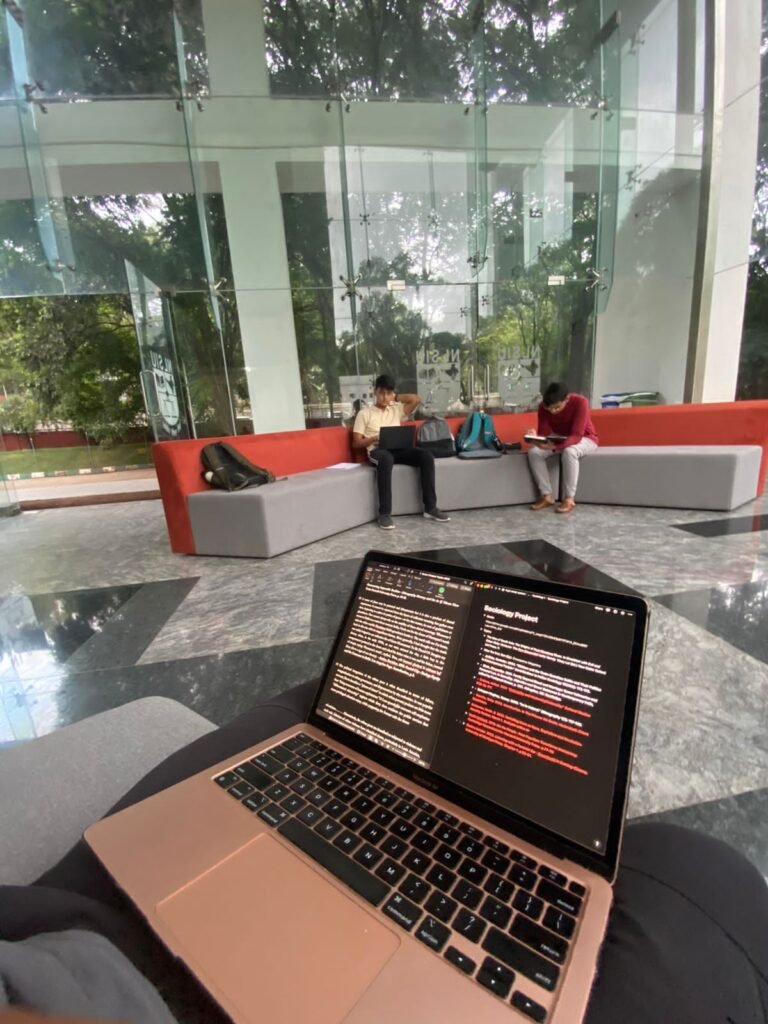
My day begins at 7 AM with getting ready and breakfast before classes start at 9. This trimester, I have classes till 4 PM on three days and till 1 PM on two. After classes, I usually take a short nap, grab snacks at the mess, and catch up with friends. By 5:30, I head to the library and finish my readings by 7:30. After dinner, I take a short walk around campus and return to the library by 8:30 to work on assignments until it closes at 12.

🍽️ Food (Mess/Canteen)
- How is the food at your law school in terms of taste, variety (veg/non-veg options), and hygiene?
We’re provided with four meals a day in the mess: breakfast, lunch, snacks, and dinner. Breakfast typically includes South Indian dishes, along with staples like bread, butter, jam, cereal, and tea or coffee. Lunch usually consists of two types of rice, chapati, 1–2 dals, a vegetable dish, salad, and curd. In the evening, tea and coffee are always available, along with a rotating drink (like cold coffee, juice, or milkshake) and a variety of snacks such as vada pav, samosa, French fries, Papdi chaat, and more. Dinner often includes paneer or chicken (available six days a week as paid extras), and we have pasta, noodles, Manchurian, egg curry, or biryani a few times a week.
- Are there good alternatives to mess food nearby (cafes, delivery options)?
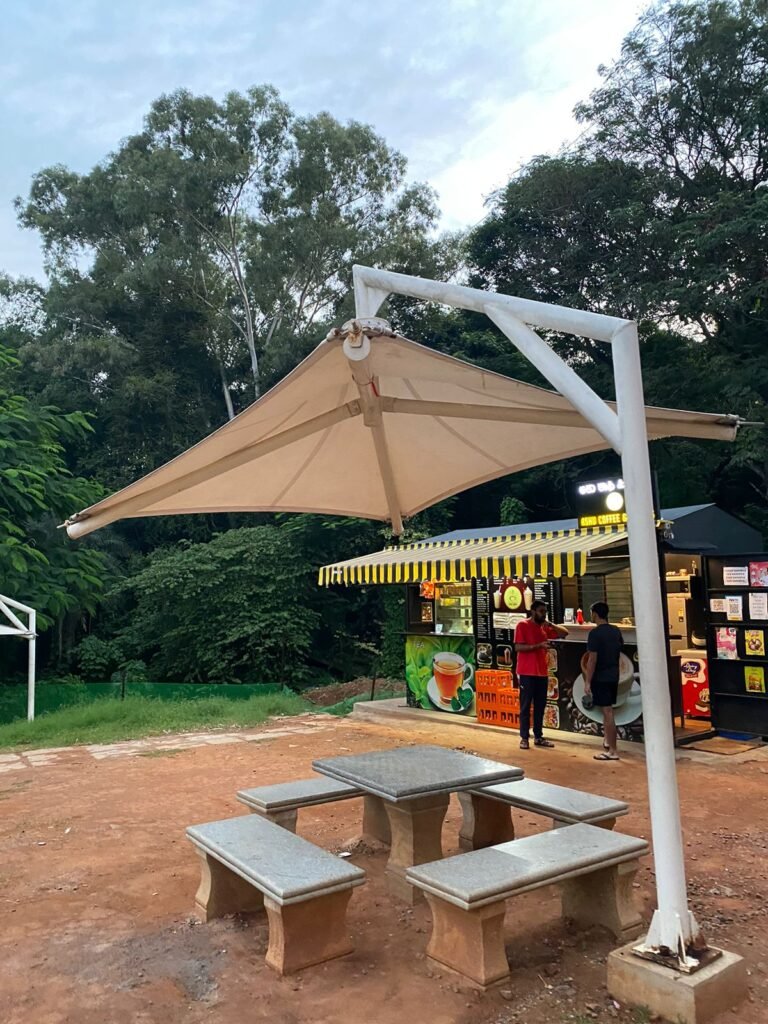
On campus, we have three eateries: OAB Canteen, Ashu, and Food Box. Additionally, there are several dining options within a 500-meter radius. When it comes to food delivery, there are three main gates: one outside the Old Academic Block, one at the Women’s Hostel, and one at the Men’s Hostel. This makes ordering food very convenient, as all restaurants and delivery partners usually deliver to all three gates.
- How do students usually manage food when the mess food isn’t good? How is the water availability?
There are days when we can’t bring ourselves to eat the mess food simply because of how monotonous mess food can get sometimes. On such days, we either go to one of the food chains on campus (mostly Food Box because of the variety) or order in.
There usually isn’t a problem with drinking water in the hostels, but the water filters in the academic blocks tend to run out of water quickly, and they don’t get refilled fast, leaving us with no option for drinking water.
🏡 Hostel Life
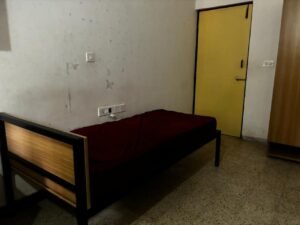

- What is the last entry time for hostels? How strict are the hostel rules regarding timings and permissions?
NLS has no curfew or restrictions on entry and exit timings. However, we are required to tap our id cards every time we leave and enter campus.
- How are the hostel facilities overall (rooms, cleanliness, Wi-Fi, common areas)?
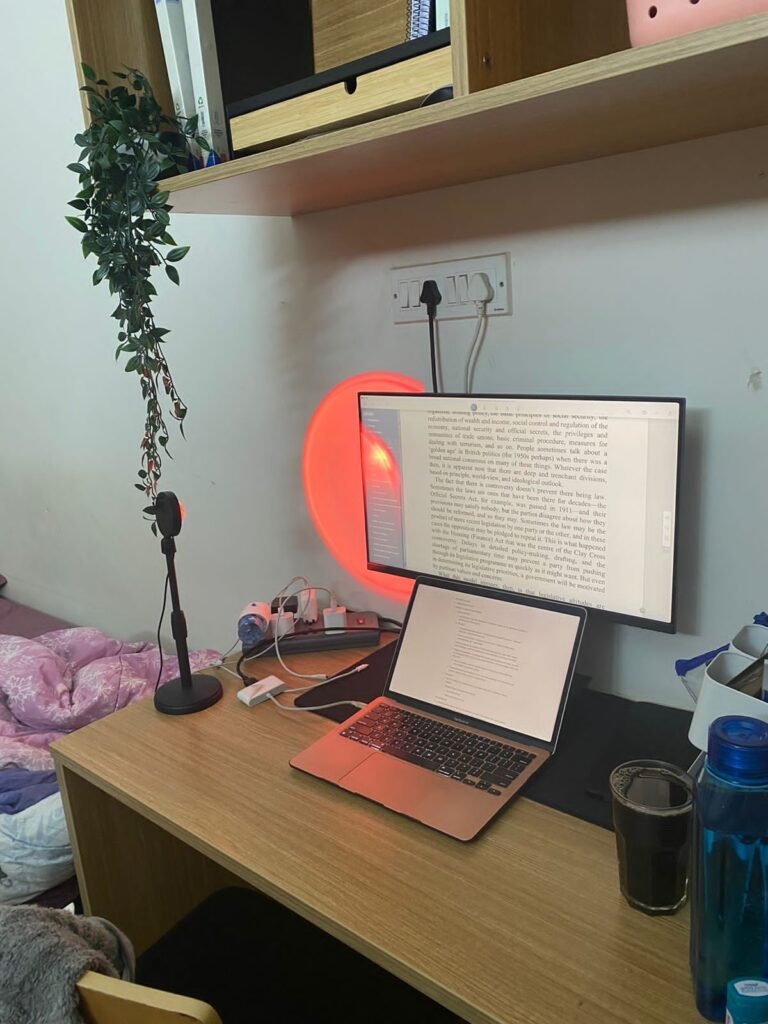
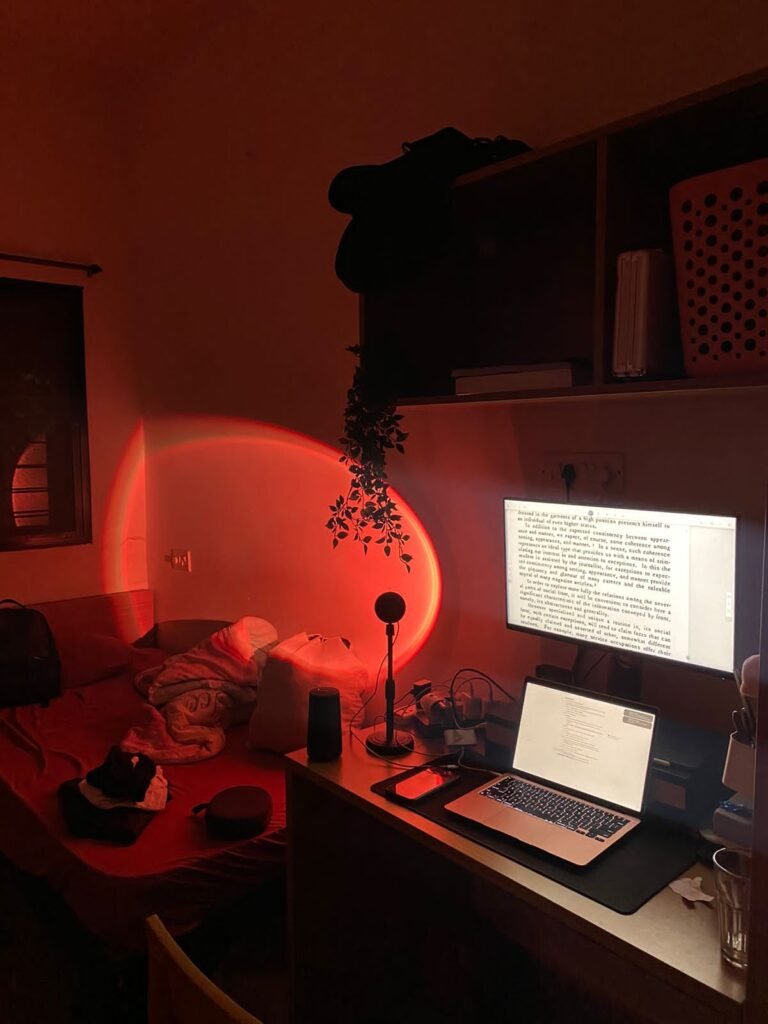
Room size and cleanliness vary from one hostel to another. For instance, in the women’s hostels, Narmada and Vindhyas have relatively big rooms, whereas Annapurna and Yamuna are quite cramped. Furthermore, while most rooms are double sharing, there is an option for triple sharing in Nilgiris. In the Gangotri hostel, the ground floor serves as a common area for women, which includes a workspace and a table tennis board. There have been many instances where the Wi-Fi on campus gets disrupted, affecting assignments and submissions.
- What’s the social life like in hostels — are there events, gatherings, study groups?
No, hostel-wise events have come to a halt over the past 1 year. However, initially in the first trimester hostel events such as movie screenings were conducted.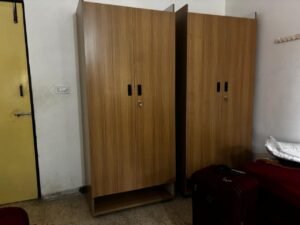
- How is the hostel infrastructure? Are the rooms single, double or triple sharing?
Again, this varies from one hostel to another, but rooms are largely clean and have sufficient space. Most rooms are double sharing. However, from second year you can opt for triple sharing rooms.
- Is ac facility available?
Classrooms are air-conditioned. Hostel rooms are not air conditioned.
- Does one need their parent’s permission to go out of the campus (as in, is some otp sent to parents) ?
No, we are required to tap our ID cards when we leave and enter the campus, but no prior permission is required. Furthermore, there is no curfew.
- The washrooms are shared by how many people ?
Around 10 people on average. There are usually two washrooms on a floor. Each washroom has 2 shower stalls and 3 bathrooms on average.

📜 Rules & Regulations
- What are the major academic rules and regulations, especially regarding attendance and exams?
The attendance requirement is 75%. But there are certain cases where attendance above 66% is permitted in case of medical emergencies, menstrual leave, etc. (I’ll attach the Academic regulations as well).
- How strict is the administration regarding discipline and code of conduct?
Discipline and code of conduct are enforced quite strictly. “DARlC” means the University’s Disciplinary Matters Advisory, Review and Investigation Committee appointed to look into the matters concerning violation of the code of conduct. Any incidents of discrimination, harassment, or violence is dealt with strictly. Furthermore, there is no culture of ragging on campus.

- Are there specific dress codes for certain activities like moots or presentations?
In our first year, we were not asked to adhere to any specific dress code for internal evaluations like viva or moots. However, students usually wear formals for moots.
📝 Academics: Internals, Assignments, Unit Tests
- How frequent are the internals, assignments, and UTs (Unit Tests)?
In a trimester, the first month is relatively free. From the second month onwards, the frequency of submissions and exams increases. There is no fixed schedule in terms of how often we have assignments. For instance, in our second trimester, our submissions were spaced out pretty well. We had a term paper for each subject and a viva. However, this trimester, the number of evaluation components is higher because of which we have more than one component in a week (such as a midterm and submission for different subjects)
- Are assessments heavily weighted towards exams, projects, or continuous evaluation?
Owing to the continuous evaluation system followed at NLS, each subject has multiple components spanning the 3-month term. These components may be in the form of research papers, midterms, vivas, moots, case presentations, class participation, etc. Each subject comprises 3-4 assessment components, including an end-term paper whose weightage varies.
📚 Classes and Timing
- What is the daily class timing like?
Classes start at 9 every day. Class timings change every trimester. This trimester we have classes till 4 on 3 days and classes till 1 on 2 days. Last trimester we had classes till 7 on some days,
- Are Saturdays working days at your law school?
No. However, vivas and moot orals are scheduled on Saturdays.
- How hectic is the weekly schedule?
Considering classes extend till 4 on most days, we have readings to complete for the next day and work on other assignments and exams, finding time for other activities becomes an issue.

🎉 Semester Breaks
- When are the semester breaks scheduled? And how long are these semester breaks?
Since NLS follows a trimester system, we get a one-month-long break after every trimester in October, February and June.
- Are breaks enough to take internships or refresh properly?
We are required to undertake one compulsory internship every year for twenty days. This gives us time to enjoy some part of the break.
🌍 Diversity and National Representation
- How is the national representation at your law school — do students come from all over India?
Yes, the national representation at our law school is truly diverse. Students come from all corners of India — from metropolitan cities to small towns and remote regions. This mix brings in a rich variety of perspectives, cultures, and experiences, making classroom discussions more engaging and holistic. It also fosters a vibrant, inclusive campus environment where students learn as much from each other as they do from the curriculum.

- How inclusive and diverse is the campus culture?
The campus is largely an inclusive space, but the presence of friend groups based on language and state is quite predominant.
🛎️ Day 1: Registration and Admission
- What was the Day 1 experience like during hostel registration and college admission?
The process was smooth as the admin had conducted an orientation, guiding us on how to go about the process. We were required to submit certain documents for verification. Following this, we collected keys from the hostel office.
- Are there any important tips for a smooth admission/hostel registration process?
The process is simple and easy to follow. Instructions regarding admission are issued before joining.
⚖️ Moot Court Activities
- What is the culture around mooting at your college?
Many people do participate in moot competitions conducted within the college and externally. However, it isn’t a mandatory co-curricular activity that one needs to take part in. Several people choose not to participate. For those interested, the college conducts internal competitions and expose students to a wide variety of external competitions.
- How early can a first-year student start participating in moots?
A first-year student can take part in the University Moot Selection Rounds, which usually take place in the first trimester. On receiving a rank, they can apply for external events through the university.
- Are there internal selections for moots?
Yes, University Moot Selection Rounds.
- Is there any special training or mentorship available for moots?
Yes, first-year students can seek mentorship for moots.
🎯 Extracurriculars
- What extracurricular activities are available at your law school?
Sports, committees, clubs.
- Which activities would you recommend to a 1st year student?
There are quite a few interesting committees to choose from. First years usually end up joining the cultural committee or the events committee as a relief from all the ‘academic rigour’.
- How do extracurriculars help in career building or internships?
In the first year, since students don’t have much to add to their CVs, extracurriculars serve as a good starting point. Furthermore, a CV usually comprises co-curricular activities, extracurricular activities, internships and publications in addition to one’s GPA. In this regard, extracurriculars play a significant role as a key component of a CV.
- Are there any limitations to participating in extracurriculars?
Since the trimester is pretty hectic, and the attendance requirement is high, it not only becomes challenging to manage academics with extracurricular activities, but it is also rare to get attendance exemptions when taking part in competitions, etc.
- How do you personally balance academics and extracurricular activities?
I have not taken part in many activities within college in the first year. I was briefly part of the Dance Association.
👥 Committees
- What are the major committees and societies in your law school?
CulComm, EMC (Event Managament), Moot Court Society, Academic Support Programme (ASP), Alternative Dispute Resolution Board, Sports Committee
- Which committees should a first-year student definitely try to join? What is the process of getting into a committee? How competitive is the selection for these committees?
These are largely open committees i.e., a student needs to attend three committee meetings to become a part of the committee. Since there is no particular criterion for joining, a student can explore any committee that interests them.
🎊 Fests and Campus Life
- What are the major college fests?
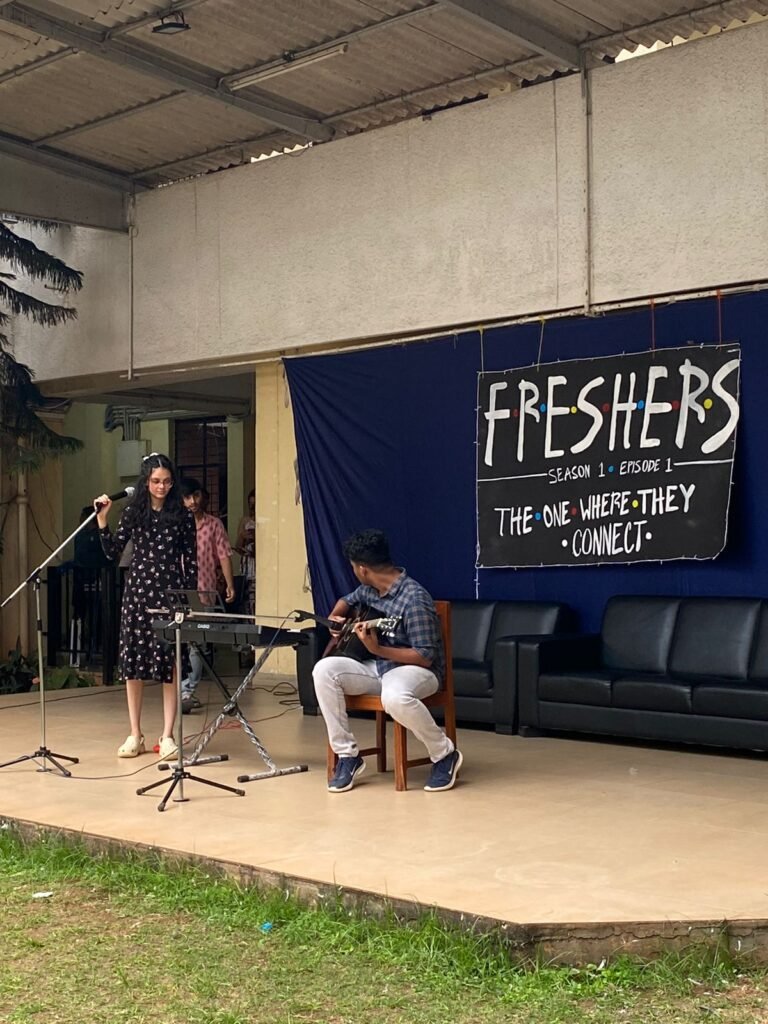
Culcomm and EMC usually host multiple events throughout the year. Univ Week, which usually takes place in the third trimester, is the most happening time on campus, with events planned every day for a week.
- How vibrant is the cultural and sports scene at your law school?
The sports committee organises tournaments for volleyball, basketball, cricket and football throughout the year.
🏀 Sports Facilities
- What kind of sports facilities are available on campus?
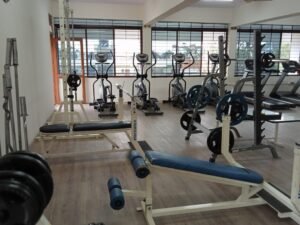
There is a basketball court and a football field on campus. Some hostels have a badminton court.
- Are there any sports teams or tournaments students can participate in?
Yes, both internal and external.
🎓 Class Representative (CR) Selection and Responsibilities
- How is the CR (Class Representative) selected?
Students give a speech, and this is followed by a vote. 2 CRs are elected for a class.
- What are the main responsibilities of a CR?
The CR largely acts a mediator between students and the professors/admin.
- How much influence or say does a CR have regarding student concerns?
The CR is simply a representative of student concerns and usually doesn’t overpower the majority opinion.
🏛️ Student Union
- Is there a Student Union at your college?
Yes, Student Bar Association.
- How active is the Student Union in addressing student issues or organizing events?
The SBA adopted a Constitution of its own in 2000, which regulates its structure and functioning. The SBA Constitution provides for the yearly formation of 12 Activity Based Committees (ABCs), each having a specific focus. The individual members of each ABC are chosen on the basis of merit in the respective area. Each ABC is headed by a student Convener elected by the particular committee’s members, and its functioning is supervised by a faculty advisor. The University funds the intra-institutional activities of the various ABCs, while individual committees raise external sponsorships for their respective inter-institutional events and activities. Furthermore, every class elects two student representatives who together form the Class Council. This body liaises with the faculty on academic issues.
- Can first-year students get involved with the Student Union?
Yes, through certain positions open for first years. CRs also become a part of the student body.
💼 Key People in the Administration
- Who are the key people in the administration that students should know about? (Dean, Registrar, Warden, etc.)
https://www.nls.ac.in/about/people/administrative-staff/
- Whom should students approach for different issues like academic help, hostel problems, or disciplinary matters?
Such issues are usually brought up through Digiicampus (app).
- “Is there any unwritten advice about how to approach professors or administration to get help more easily?”
Professors are usually pretty friendly and willing to interact outside class hours. We have office hours for all subjects once a week, wherein students can approach faculty and raise their concerns.
Scholarships
- What scholarships are available for the students?
https://www.nls.ac.in/information/students/financial-aid-for-students/
https://www.nls.ac.in/information/students/financial-aid-for-students/list-of-external-scholarships/
🛠️ Internship Guidance
- How does the college support students in finding internships?
The Academic Support Programme (ASP) provides us with an internship repository consisting of internships undertaken by seniors and a description of the experience and how to apply. The Career Cell also provides some guidance.
- What should a first-year law student do to land good internships?
In the first year, we are mandated to do an NGO internship. NGO internships are relatively easy to get.
- What types of internships are recommended during the first year?
NGO internship as mandated by the university.
❤️ College Likes & Areas of Improvement
- What do you like the most about your college?
The exposure we get when it comes to faculty or even external speakers who conduct sessions occasionally. Another thing I really admire about NLS is how helpful the seniors are.
- Where do you think the college can improve?
While I understand the academic rigour stems largely from the trimester system, with wuite a few subjects in our first year, I felt I didn’t get enough time to understand the subject and learn it properly. In several subjects, several modules are deleted as there isn’t much time to cover these portions towards the end of the trimester.
🏆 College Strengths
- According to you, what are the three biggest strengths of your college?
The alumni base, exposure to some of the best faculty, placements
🎯 Placements and Career Support
- How strong is the placement cell at your college?
The placement cell at our college is exceptionally strong and well-organized. It actively engages with top law firms, corporate houses, litigation chambers, policy think tanks, and NGOs to secure a wide range of opportunities for students.
- What kind of firms, companies, or organizations usually recruit from your campus?
0-Day placements typically commence around August, during the 13th trimester, with participation from top-tier law firms and recruiters. Pre-Placement Offers (PPOs) are usually extended in the 4th year, though exceptional candidates may receive them as early as the 3rd year, based on outstanding internship performance.