



These are scholarships with no fixed regional destination, they allow you to pursue postgraduate study across multiple countries and are among the most competitive and prestigious awards available to Indian law graduates.
The Fulbright Foreign Student Program
The Fulbright Programme is administered in India by the United States-India Educational Foundation (USIEF) and is one of the most recognised scholarship programmes in the world. For Indian students, the Fulbright-Nehru Master’s Fellowships offer funding for postgraduate study at accredited US universities, including law schools offering LLM programmes.
What it covers: Full tuition, a monthly living stipend, round-trip airfare, and health insurance for the duration of the programme. 
Who it is for: The Fulbright programme places significant weight on leadership potential, community engagement, and the ability to contribute to Indo-US relations and mutual understanding. Academic excellence is important but not the only factor. Applicants with a strong public interest or policy orientation tend to do well.
Important notes: The application cycle typically opens around May-June each year for fellowships beginning the following academic year. You will need to apply to US universities separately and in parallel. Selection involves a written application, academic transcripts, letters of recommendation, and a personal statement, followed by a shortlisting and interview process conducted by USIEF.
Rotary Foundation Global Grants
The Rotary Foundation offers Global Grants for graduate-level study that aligns with one or more of Rotary’s areas of focus: peace and conflict prevention, disease prevention, water and sanitation, economic development, education, and the environment. For law students, the peace and conflict prevention track and the economic development track are the most relevant.
What it covers: Global Grants are worth a minimum of $30,000 USD and can go significantly higher depending on the project scope and the involvement of Rotary clubs in both the home and host countries. The grant covers tuition, living expenses, and travel.
Who it is for: You do not need to be a Rotary member to apply, but you do need to work with a local Rotary club, which will sponsor your application and partner with a Rotary club in your destination country. The process requires building relationships with Rotary early, ideally a year or more before you plan to apply.
Important notes: The Rotary Global Grant is not a standard scholarship application. It requires active engagement with Rotary clubs, a clearly articulated vocational training plan, and a commitment to applying the skills you gain to address a specific area of focus after your studies. It rewards applicants who can demonstrate a concrete connection between their LLM and a real-world problem.
Aga Khan Foundation International Scholarship Programme
The Aga Khan Foundation Scholarship is one of the few funding options specifically designed for students from developing countries, including India. It supports postgraduate study at internationally recognised universities and is available for a range of disciplines, including law.
What it covers: The scholarship provides a combination of 50% grant and 50% loan, covering tuition and living expenses. The loan component is repayable after you complete your degree and begin working.
Who it is for: The scholarship prioritises candidates who demonstrate outstanding academic achievement, financial need, and a commitment to returning to and contributing to their home communities. It is not aimed at students seeking to settle abroad permanently.
Important notes: Applications are accepted once a year, and the process is highly competitive. Shortlisted candidates go through a rigorous selection process including interviews. Given the 50% loan component, it is worth carefully considering this alongside other funding options; though for students with genuine financial need, it remains one of the more accessible pathways to international postgraduate study.
The UK is the most popular destination for Indian LLM aspirants, and for good reason. Universities like Oxford, Cambridge, LSE, UCL, and King’s College London offer some of the most respected LLM programmes in the world. Fortunately, the UK also has a robust scholarship ecosystem for international students.
Chevening Scholarships
Chevening is the UK Government’s flagship international scholarship programme, funded by the Foreign, Commonwealth and Development Office (FCDO). It is one of the most competitive and most sought-after scholarships available to Indian law graduates.
 What it covers: Chevening is fully funded. It covers full tuition fees, a monthly living stipend, economy class return airfare to the UK, and an arrival allowance. There are also additional grants for things like the dissertation and study-related travel.
Who it is for: Chevening targets future leaders- people who have demonstrated leadership in their field and who are likely to occupy positions of influence in their careers. A minimum of two years of work experience is required. Academic excellence matters, but Chevening is just as interested in your leadership profile, your networking ability, and your potential to strengthen ties between India and the UK.
Important notes: You must apply to three UK universities before submitting your Chevening application. Chevening comes with a condition: you must return to your home country for a minimum of two years after completing your degree. The application cycle opens in August and closes in November for scholarships beginning the following September. Shortlisted candidates are interviewed between February and April.
Commonwealth Scholarships
The Commonwealth Scholarship Commission offers funded scholarships for citizens of Commonwealth countries (which includes India) to pursue postgraduate study in the UK. There are several categories, including the Commonwealth Master’s Scholarship aimed at students from lower and middle-income countries.
What it covers: Full tuition fees, a monthly living stipend, round-trip airfare, and a thesis grant.
Who it is for: Commonwealth Scholarships are specifically designed for students who demonstrate the potential to contribute to the development of their home countries. They are particularly well-suited for those with a public interest, human rights, or governance focus in their legal studies.
Important notes: Applications are made through the national nominating agency in your home country; in India, this is typically coordinated through the Association of Indian Universities (AIU). The process is multi-stage and can be competitive at the national nomination level before even reaching the Commission. Start early and be clear about your development-oriented goals in your personal statement.
Great Scholarships
 The GREAT Scholarship programme is a joint initiative between the British Council and participating UK universities. It offers a minimum of £10,000 towards tuition fees for one-year postgraduate programmes.
What it covers: A minimum grant of £10,000 toward tuition. This is typically a partial scholarship rather than a full award, meaning you will need to fund the remainder yourself or through other sources.
Who it is for: Eligibility and selection criteria vary by university. Each participating institution sets its own requirements. The scholarship is available to Indian students for study at a wide range of UK universities.
Important notes: GREAT Scholarships are worth exploring as a supplementary funding source alongside a more comprehensive award. A list of participating universities and their specific criteria is published on the British Council India website each year. Deadlines vary by institution.
University-Specific Awards
Beyond the government-backed programmes, individual UK universities offer their own LLM funding:
Oxford’s Clarendon Fund is one of the most prestigious university scholarships in the world, covering full tuition and a generous living grant. It is awarded on the basis of academic excellence and is open to all graduate applicants, including those applying for the BCL or LLM at Oxford. Crucially, you do not apply for the Clarendon separately; you are automatically considered when you submit your graduate application.
Cambridge offers the Cambridge International Scholarship Scheme (CISS) for PhD students and various other awards for LLM students, including college-specific bursaries. Like Oxford, many Cambridge scholarships are allocated automatically based on your application.
LSE, UCL, and King’s College London all offer partial tuition scholarships and excellence awards for LLM students. These are often competitive and require a separate application. Check the financial support pages of each university carefully when building your application list.
US LLM programmes, particularly at schools like Harvard, Yale, Columbia, NYU, and Stanford are among the most expensive in the world. Tuition alone can exceed $70,000 USD per year, and living costs in cities like New York and Boston add significantly to that figure. However, a range of scholarships and financial aid options can make study in the US viable.
Knight-Hennessy Scholars at Stanford University
The Knight-Hennessy Scholars programme at Stanford is one of the largest fully funded graduate scholarship programmes in the world. It provides up to three years of funding for any Stanford graduate degree, including the JSM ( Master of the Science of Law) or JSD at Stanford Law School.
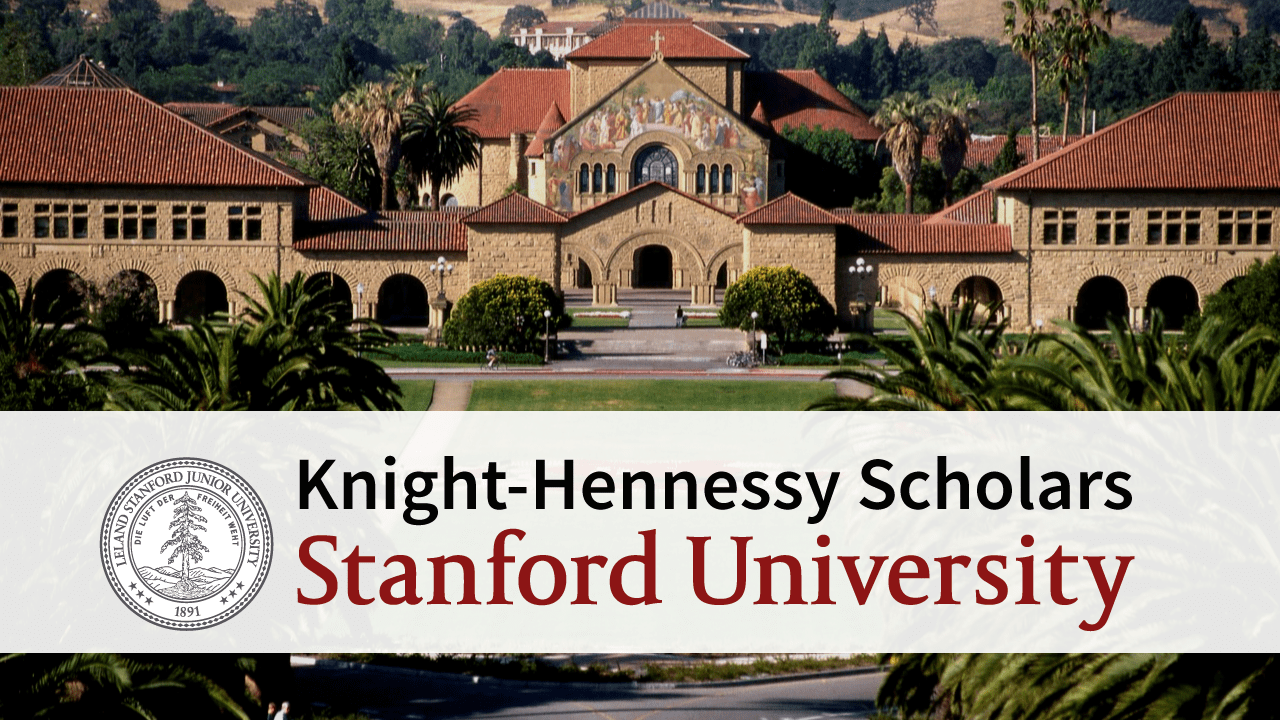
What it covers: Full tuition, a living stipend, and an academic enrichment fund for the entire duration of the programme.
Who it is for: Knight-Hennessy looks for independent thinkers with a record of purposeful leadership and a commitment to addressing complex global challenges. It is intensely competitive and designed for applicants who can demonstrate exceptional potential rather than just academic achievement.
Important notes: You must apply to both the Stanford graduate programme and the Knight-Hennessy scholarship separately. Scholarship applications typically open in August and close in October for the following academic year. The selection process involves a written application followed by a finalist event at Stanford.
NYU Law Hauser Global Scholars Program
New York University School of Law’s Hauser Global Scholars Programme is one of the most prestigious LLM awards in the United States. It is offered to a small number of elite international LLM applicants each year.
What it covers: Full tuition and a living stipend to cover reasonable expenses in New York City.
Who it is for: The programme targets outstanding international lawyers who have demonstrated exceptional academic achievement and professional promise. There is no separate application; Hauser scholars are selected directly from the LLM applicant pool by the NYU Law admissions committee.
Important notes: Being considered for the Hauser scholarship depends entirely on the strength of your LLM application to NYU. There is no box to tick or separate form to submit. This makes the quality of your application to NYU itself extremely important. Candidates from India have historically been competitive for this award, particularly those with strong academic records from top NLUs.
Harvard Law School Financial Aid

Harvard Law School does not offer traditional merit-based scholarships for LLM students. Instead, HLS has a need-based financial aid programme that can provide grants, not loans, to students who demonstrate financial need relative to the cost of attendance.
What it covers: Need-based grants that reduce tuition costs. The amount varies significantly depending on your financial situation.
Who it is for: Any LLM student admitted to HLS can apply for need-based aid. Harvard uses a detailed financial assessment process and is known for being reasonably generous with students who can demonstrate genuine financial need.
Important notes: The assumption that Harvard is financially out of reach for all but the wealthiest students is not entirely accurate. If you are admitted to HLS and can demonstrate financial need, the actual cost of attendance can be significantly reduced. It is worth going through the financial aid application process carefully rather than assuming you will not qualify.
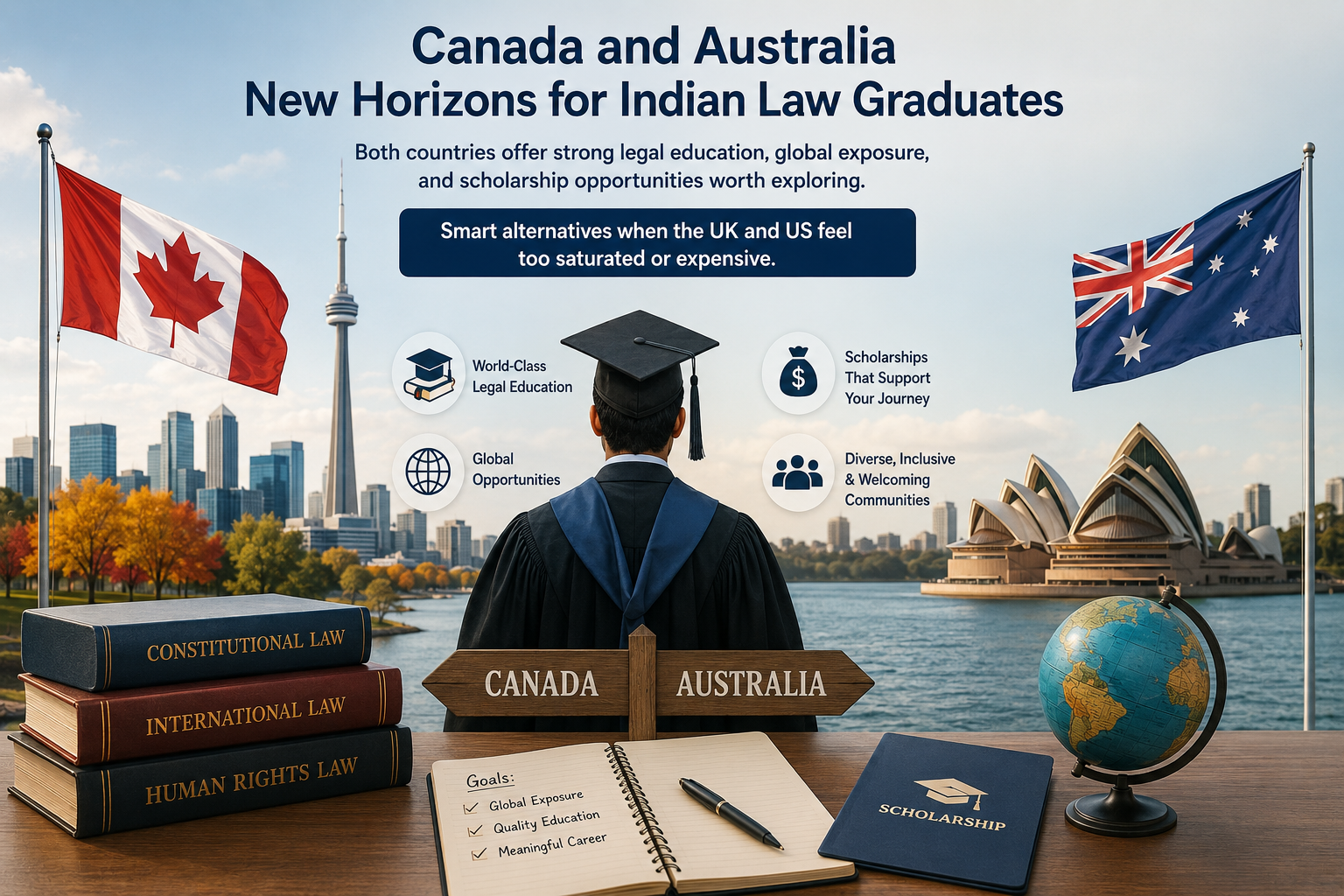
Canada and Australia are increasingly popular destinations for Indian law graduates, and both countries have developed scholarship ecosystems that are worth exploring seriously; particularly for students who find the UK and US markets too saturated or expensive.
Canada
Canada does not have a single flagship LLM scholarship equivalent to Chevening or Fulbright, but there are several strong funding options worth pursuing.
For LLM students specifically, the most practical routes to funding in Canada are through institutional scholarships offered by universities like the University of Toronto, McGill, Osgoode Hall (York University), and the University of British Columbia. Each of these schools offers partial or full merit-based awards for top international LLM applicants. Toronto’s LLM in International Law and McGill’s comparative law programmes are particularly well-regarded, and both schools have dedicated international student funding that is worth enquiring about directly.
Many Canadian provinces also offer their own bursary and grant programmes for international postgraduate students. These are smaller in value but can supplement other funding sources.
Australia
Australia Awards are the Australian Government’s flagship international scholarships, funded by the Department of Foreign Affairs and Trade. They are available to students from select countries (India is eligible) for full-time postgraduate study at Australian universities.
What they cover: Full tuition, return airfare, a living allowance, health insurance, and pre-course English language training if required.
Who they are for: Australia Awards prioritise development outcomes and are aimed at students who will return to their home countries and contribute to development in areas aligned with Australia’s aid priorities. Law students working in fields like governance, human rights, or access to justice are well-positioned to make a strong application.
Beyond Australia Awards, institutions like the University of Melbourne, the University of Sydney, and the Australian National University (ANU) offer merit-based excellence scholarships for international postgraduate students. Melbourne Law School in particular has a strong LLM programme and a history of attracting Indian law graduates. The Melbourne Research Scholarship and the Melbourne International Fee Remission Scholarship are worth investigating for students considering the research LLM pathway.
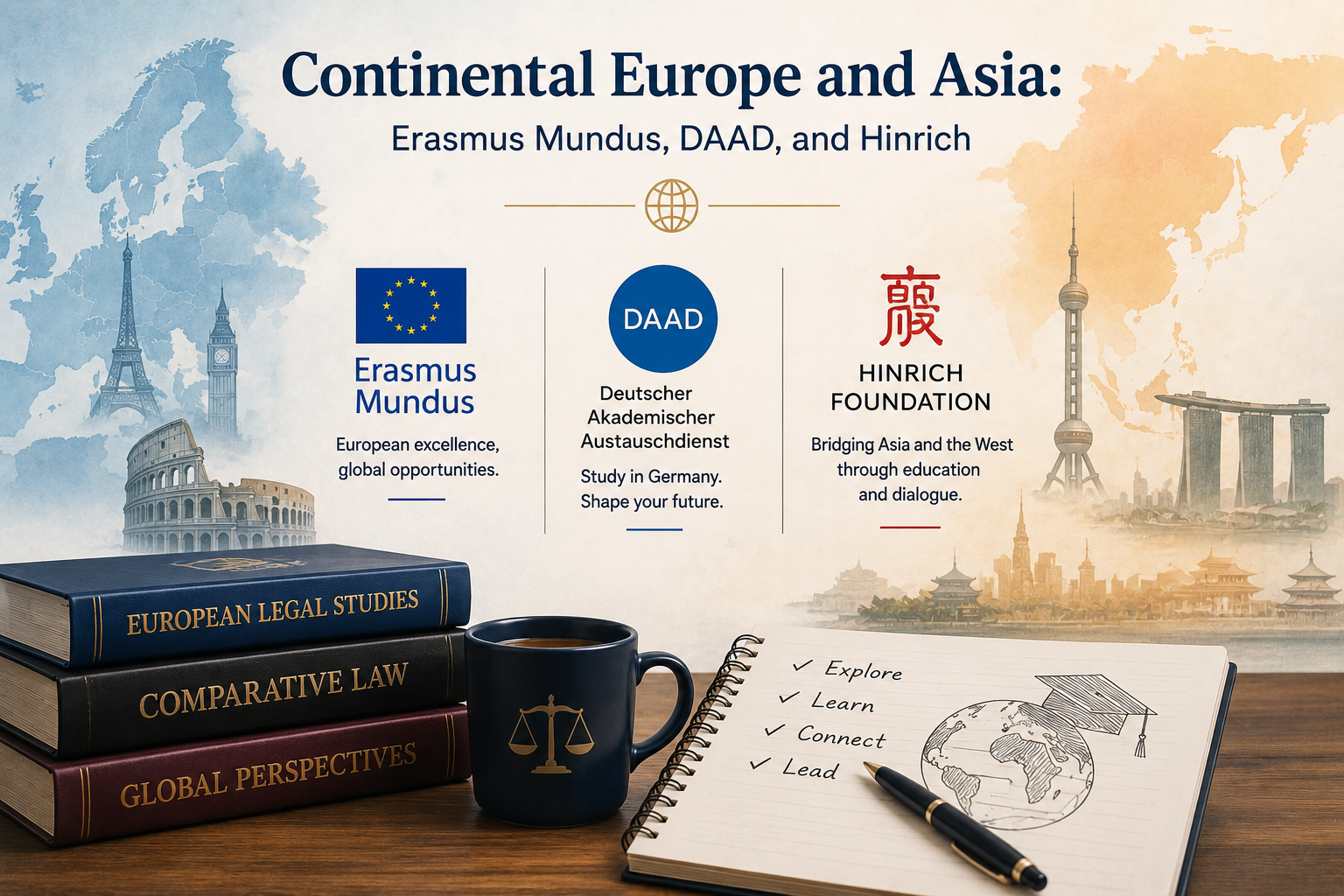
Europe and Asia are often underestimated as LLM destinations by Indian law graduates, partly because of unfamiliarity and partly because of language concerns. But both regions offer genuinely excellent legal education, sometimes at a fraction of the cost of UK or US programmes, and with strong scholarship support.
Erasmus Mundus Joint Master Degrees
The Erasmus Mundus programme, funded by the European Union, supports joint master’s degrees offered collaboratively by multiple European universities. Students study at two or more partner institutions across different countries, making it a uniquely international experience.
What it covers: A full scholarship covering tuition, a monthly living allowance, travel costs, and insurance. The scholarship values are generous, typically around €1,000–€1,400 per month in living allowance, with full tuition covered.
Who it is for: Erasmus Mundus is open to students from anywhere in the world, including India. Scholarships are competitive and awarded on academic merit and the strength of the application. For law students, relevant programmes include the European Master in Law and Economics (EMLE), offered across multiple European partner universities, and programmes focused on international human rights, environmental law, and intellectual property.
Important notes: Each Erasmus Mundus programme has its own application portal and deadline. A good starting point is the official EMJMD catalogue on the European Commission’s website, where you can filter by subject area and find programmes relevant to law.
DAAD Scholarships: Germany
The German Academic Exchange Service (DAAD) is one of the largest funding organisations for international academic exchange in the world. It offers a range of scholarships for postgraduate study in Germany.
What it covers: A monthly stipend to cover living costs (typically around €850–€1,200 depending on the level of study), travel allowance, and health insurance. Tuition at German public universities is either free or very low, often under €500 per semester,which makes Germany one of the most cost-effective destinations for an LLM even without a scholarship.
Who it is for: DAAD scholarships are available to Indian students and are awarded on the basis of academic achievement and the relevance of the proposed study to your career goals. A basic working knowledge of German can be helpful for daily life, though many LLM programmes in Germany, particularly at universities like Heidelberg, Hamburg, and Bucerius Law School, are fully taught in English.
Important notes: Bucerius Law School in Hamburg is worth specific mention. It is a private law school with a strong international reputation, particularly for its LLM in International Business Law, and it offers its own merit-based scholarships for top applicants. For students interested in European commercial law or international arbitration, Germany is a serious option.
Hinrich Global Trade Leader Scholarships
The Hinrich Foundation offers scholarships for master’s-level programmes focused on international trade and related areas of law and policy. It operates primarily in Asia, with partner universities in Hong Kong, Singapore, and other Asian hubs.
What it covers: Full or partial tuition, depending on the partner institution and programme.
Who it is for: The scholarship is aimed at working professionals and recent graduates who are committed to building careers in international trade, trade law, customs, or trade policy. It is particularly relevant for law graduates interested in WTO law, trade remedies, international commercial contracts, or cross-border regulatory practice.
Important notes: Asia, and Singapore in particular, is an increasingly attractive destination for Indian law graduates interested in international arbitration and commercial law. The National University of Singapore (NUS) and Singapore Management University (SMU) both have strong LLM programmes and offer merit-based institutional scholarships. Hong Kong University’s LLM programme, particularly in Chinese law and business law, is also worth exploring for students with an interest in Asian markets.
This is perhaps the most underexplored category of LLM funding, and for that reason, it is also one of the least competitive. Numerous law firms, bar associations, and private trusts offer scholarships, bursaries, and sponsorships for law graduates pursuing postgraduate education abroad. Because these awards are less publicised, many qualified candidates never apply.

Law Firm Sponsorships
Several top-tier international law firms, particularly Magic Circle and Silver Circle firms in the UK, have formal or informal pathways to sponsor LLM study for high-performing trainees or associates. If you are already working at a law firm, it is worth having a direct conversation with HR or your supervising partner about whether the firm has an LLM sponsorship policy. Firms like Linklaters, Clifford Chance, and Allen & Overy have historically supported employees pursuing LLMs at Oxford, Cambridge, LSE, and US schools, sometimes offering full tuition coverage with a commitment to return to the firm post-graduation.
Even if you are not yet working at a firm, some firms extend scholarship opportunities to exceptional final-year students or fresh graduates. Keep an eye on firm websites and legal industry publications for any such announcements.
The Bar Council of India and State Bar Councils
The Bar Council of India and some state bar councils offer limited scholarships and financial assistance for young lawyers pursuing higher education abroad. These are not always well-advertised, and the amounts vary significantly, but they are worth investigating, especially if you are already enrolled at the bar and have a track record of legal practice.
Independent Trusts and Foundations
Several private trusts and charitable foundations in India and the UK offer bursaries for postgraduate study. Some are specifically focused on law; others are open to any field of study. A few worth noting:
The J.N. Tata Endowment for the Higher Education of Indians offers loan scholarships for postgraduate study abroad. These are not grants, they are loans, but they come at very favourable terms and have historically been awarded to law graduates pursuing LLMs at top universities. The application process is competitive and requires strong academic credentials and a clear study plan.
The Inlaks Shivdasani Foundation offers fully funded scholarships for study at top universities outside India, covering tuition, living costs, and travel. Law is an eligible field of study. The Inlaks scholarship is one of the more generous private awards available to Indian students and is significantly less well-known than Chevening or Fulbright, which means the competition, while still serious, is somewhat less intense.
The Felix Scholarship is awarded to students from India, Pakistan, and selected other countries for postgraduate study at Oxford or SOAS, University of London. It covers full tuition and living costs and is one of the most valuable scholarships available specifically for study at Oxford. Law graduates pursuing the BCL or LLM at Oxford are eligible.
The Shivaji Rao Gaekwad Foundation and several other smaller trusts offer awards for Indian students in professional fields. These are worth researching through your university’s alumni office or through databases like the British Council’s scholarship finder.
About the author

Tina Chakraborty is a first-year law student at The West Bengal National University of Juridical Sciences with a keen interest in legal research, policy discourse, and emerging areas of law. A former Head Girl of Army Public School, she has consistently demonstrated excellence in academics, leadership, and communication.
She currently serves on the editorial teams of the Society for International Trade & Competition Law and the Intellectual Property and Technology Laws Society, contributing to research-oriented legal writing and academic initiatives. Tina was also the Runners-Up at the Inter APS National Debate Competition and achieved distinction as a State Topper in Class X and School Topper in Class XII.
With a strong research-oriented approach and an analytical editorial voice, she aspires to contribute meaningfully to contemporary legal and policy discussions.