


 There is a particular kind of student who does not overthink the question of whether they belong somewhere. They simply decide they do and then do everything necessary to prove themselves right. Roshni Shaw is that kind of student.
At eighteen, she holds a seat at the National Law School of India University, Bangalore — the country’s foremost institution for legal education; after performing exceptionally well in CLAT Alongside this, she had also received a seat at NLU Delhi by cracking AILET. She scored 97% in her Class 12 ICSE board examinations. She has been topping her class, in one form or another, for as long as anyone around her can remember.
None of this is incidental. It is the result of a student who identified what she wanted early, understood what it would take to get there, and applied herself with an uncommon consistency. The discipline was entirely her own. The direction was entirely her own.
She didn’t get here despite the odds. She got here because she is simply that good.
That is the point of this story; not that it ended well against the odds, but that it was always going to end this way. The only question was whether she would get the chance. She got it. She took it. Let us hear from her how she did it.
Congratulations on your outstanding achievement. Could you share your immediate reaction upon receiving the news that you are joining NLSIU Bangalore, and what this success signifies for you personally?
It feels like a dream come true. I feel as if all of the effort that I have been putting into the process was actually worth it. Personally, it signifies that I have a bigger goal ahead for me and this is a new challenge which I would have to put my heart and soul into for fulfilling it.
When did you decide you wanted to pursure law and what motivated your decision to do so?
I thought of exploring law when I was in 11th standard. Since childhood, I had been inclined towards taking up something for the cause of the society and the people around me. Law seemed to be the apt field of scholarships that would give me the opportunity and the scope to do this.
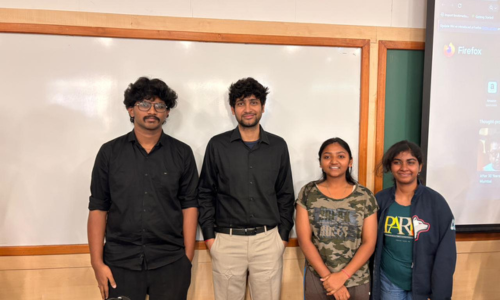


When did you start preparing for CLAT? Looking back do you think you should have started earlier or were you on time? What were a few hurdles you faced when you initially started preparing for CLAT?
I started preparing for clat in 12th grade at Clat Essentials (CE). I knew the journey was not going to easy for I had to balance my boards preparations with that of the clat. However, due to constant mentorship of my mentors at CE along with the other clat materials and guidance that they collate are just enough for anyone to build perfect attitude towards this competitive examination. Nevertheless, I had some personal hurdles like keeping up with all the quotidian changes in the current affairs, solving some of the quantitative or working upon my vocab. But the reward lies in going beyond your comfort zone and decoding one’s personal hurdles.
You were simultaneously managing school board exam pressure, CLAT preparation, and other commitments. How did you practically divide your time across all three — did you follow a fixed weekly schedule?
Frankly, I never had a fixed schedule for the same but nevertheless, I believed in maintaining a balance between the school academics and clat while distributing the days’ time proportionately. For example, I calculated the important days that I should be attending school for exams, important chapter discussion, questions discussions or evaluative components while also factoring in for meeting mandatory attendance requirement. Also I paid full attention in school curriculum whenever I attended school so that I can utilize rest of the day for focusing on clat preparation.
The preparation journey is often long and arduous. How did you navigate periods of burnout or suboptimal performance in your mock tests to maintain your momentum?
Most importantly, the mocks show where one stands and that’s why it becomes certainly momentous to track one’s performance in mocks periodically. Often it became disappointing to see my mock scores but eventually I understood that the key lies in appreciating the fact that not all mocks are same. They vary in difficulty level , with and standard of questions in each section. Therefore , it is crucial to measure progress with your previous scores along with the difficulty level of each of them and seeking continuous insights of one’s mentor becomes arduous as he/she will be the one only who is able to gauge your strengths and weaknesses.



Subject-wise, could you tell us how you approached each subject, the difficulties you faced, and how you overcame them?
English:
I started by practicing and solving English passages from the CE (CLAT Essentials) English Workbook. I also referred to some additional materials provided by my mentor. I particularly enjoyed passages related to science fiction, story excerpts, and opinion-based pieces, especially those that introduced new ideas. Occasionally, philosophical passages would also draw my attention.
I always enjoyed reading and comprehending passages. For a few weeks, I even solved some GMAT questions, which may have helped improve my comprehension skills. However, as time went on, I relied mainly on mocks and their analysis for English preparation and stopped giving sectionals.
General Knowledge (GK):
First, I would advise that whatever notes you prepare should be properly organized and stored in a folder or document, such as OneDrive or Microsoft Word.
I usually prepared my own notes but also took external help whenever required, including referring to notes made by students who had already appeared for the exam. My teachers and mentor also played a significant role in helping me navigate this section.
I regularly read semi-annual GK compendiums. This brings me to another important point: one should avoid referring to too many sources for GK.
I also subscribed to several news channels on YouTube, such as Indian Express, Economic Times, The Guardian, and Vajiram & Ravi. Watching these channels gave me a rough overview of important events that had occurred during the day. Another useful source was News On AIR Official, which provides a summary of significant public news every evening at 9:00 PM.
Legal Reasoning
For Legal Reasoning, I initially solved sectionals and gradually shifted to relying mainly on mocks and their analysis.
It is generally recommended to rely solely on the information provided in the passage and apply the principles given there, rather than using outside legal knowledge, as doing so can sometimes lead to negative marking. Nevertheless, having a basic understanding of important topics can be beneficial. Some of these include:
Contracts
Torts
Hindu Marriage Act
Alternative Dispute Resolution (ADR)
Culpable Homicide
Defamation
Intellectual Property Rights (IPR)
I also prepared important judicial precedents, popular legal maxims, and the Basic Structure Doctrine.
With consistent practice, I gradually became familiar with common traps and loopholes that examiners use in legal reasoning questions. This ability develops naturally as you encounter a wide variety of questions and mocks.
Logical Reasoning
Initially, I practiced from the CE (CLAT Essentials) Logic Workbook and CLAT Manual by Pearson. I also solved some GMAT questions, as mentioned earlier.
These resources helped build a strong foundation. GMAT questions, in particular, are of a very high standard and can significantly improve logical thinking. In many ways, they are more challenging than regular CLAT questions and help elevate one’s reasoning abilities.
For Logical Reasoning, I avoided using random sources and focused only on those recommended by my mentor.
Additionally, I occasionally practiced analytical reasoning questions, which is one area that CLAT has been increasingly exploring in recent years.
Quantitative Techniques (QT)
CLAT primarily tests mathematics up to the Class 10 level. However, one must have a thorough understanding of these concepts, ranging from basic fundamentals to advanced applications.
Some of the most important topics for QT include:
Percentages
Ratio and Proportion
Profit and Loss
Fractions
Time and Work
Mensuration
These topics form the foundation for most Data Interpretation (DI) sets and the questions that follow.
I regularly alternated between these topics while practicing. My primary resources for QT were:
CLAT Manual by Pearson
CE (CLAT Essentials) QT Concept Book
CE (CLAT Essentials) QT Workbook
I dedicated approximately 6–7 hours per week to QT and always tried to make the most of that time. While I did not follow a rigid schedule, I made it a point to complete whatever was on my to-do list.
Regular practice with a diverse range of questions plays a crucial role in improving both speed and accuracy.
Although QT carries less weightage compared to other sections, it can often become the deciding factor in securing a good rank, especially when the rest of the paper is relatively easy or moderate and many candidates score well. Therefore, I believe that practicing QT consistently is extremely important for achieving a strong CLAT rank.
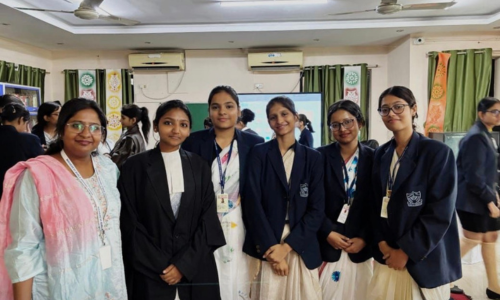

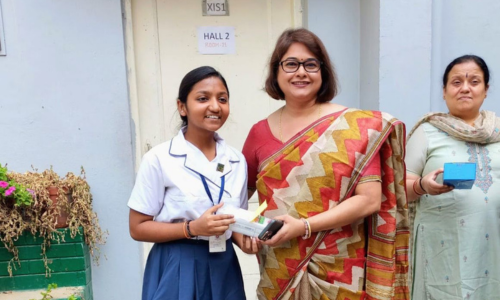
Tell us about your time at Clat Essentials. What are a few key takeaways you had from this institute?
The Clat Essentials institute was a constant source of encouragement and upliftment for my Clat preparation throughout. The whole team of faculty, seniors, along with my peers, has always kept my morale high and made me believe in the process that I can do it. All the preparatory materials at dozen have been designed keeping in mind the clat patterns and regular questions. Also, they vary in standard of difficulty to equip each student with essentially all-important types of exam patterns. Personally, for me, my mentors at CE were available not only in terms of CLAT but mentally and have been my guiding star always.
In hindsight, is there any aspect of your preparation strategy that you would alter or improve upon if given the chance?
One thing if I would change if I could go back in time would to prepare for GK more seriously and consistently as this is one area where I think I could do much better. Also, I would have not compared myself with others’ performance but to my own caliber and aptitude. Undoubtedly , it is necessary to be at par with others in the process as this is a competitive exam but it cannot be undermined that we all learn and understand differently and at different paces.
There are students right now who are just as capable as you, possibly more, but who have convinced themselves the door isn’t open. What would you tell them?
For the future clat students , I would just like to state that it is never that you are not capable to achieve something or are not ‘smart enough’. These are mere biases which we hold against ourselves and one just needs to identify where there is scope of improvement and work according to a cohesive plan or strategy in mind.
The Wind Beneath her Wings - Her Family
The people closest to a determined student often describe someone slightly different from the public version — more private, more human, more real. Roshni’s parents have watched this entire journey from the closest possible distance, quietly, without ceremony. We asked them a few questions to understand their point of view.


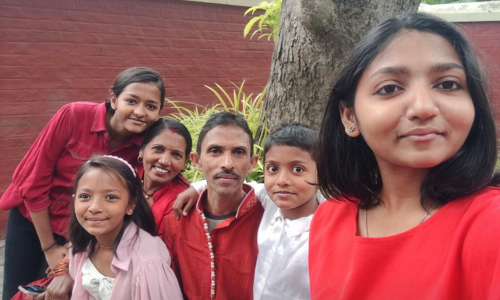
Part I – Her Father
You have four children — and you have put all four of them in the best schools you could find. That is not a small decision. For many families, it would not even be a conversation worth having. What made you certain that this was non-negotiable for you? And honestly — what did it take? Did you have to push harder, work longer, stretch further to make it happen?
Its my dream that my children are always taught the best whether in life or in academics. I always wanted that she does something big in life even if it meant working more hours or putting in more effort. She inherently had the potential and just needed someone to show her the path. And it was Clat Essentials who did this for her.
Tell us about the exact moment you found out Roshni was going to the National Law School of India University — the best law school in the country. Not what you thought. What happened. Where were you, what did she say, what did you do in that moment?
She was not very happy with her rank and her admission depended on some important documentation and without which her admission would have been almost impossible. At that moment she didn’t have that document but eventually the document was procured and only we were relieved that certainly she was going to NLSIU.
Did you ever have moments of fear — what if this doesn’t work out for Roshni? And when those moments came, how did you keep yourself steady for her?
I had never forced her to take up a certain discipline or a particular field of study. But I only asked her to do the best in whatever she chose. Frankly , we all were scared if the whole year of hard work would yield the results she dreamt for. She gave it all and got what she wanted. Even though her rank may not be upto her expectations, she did everything she could.
Part II – Her Mother
The day the result came — what was happening at home? What did you do when you heard? How did you feel knowing your daughter had made it?
Roshni knew about the day when the results were going to be out, but kept it to herself as she was not very happy with her rank. Nevertheless, I was very happy about the fact that she had made it, and also a little sad thinking that she might have to go to a different state, leaving home.
You have run this home, held this family together, and watched Roshni grow from the inside — closer than anyone. What did you see in her during those months of preparation that nobody else would have noticed?
Being my first child, I have always dreamt the she achieves great heights in her life and experience all that I couldn’t in mine. during all the preparation process, I believe she gave her 100% always, to the best she could put, managing both clat and class 12th .
Part III – Her Sister
Tell us about Roshni didi — not the topper, not the rank. The person you share a home with. What is she actually like?
Being an elder sibling , she has always been a great confidant and one of the most understanding persons at home. He has always given me her time and patient whether personally or academically. She always keeps my moral high and believed in me.
When the result came, what did you feel in that moment? And has watching her journey changed anything about your own ambitions?
I was perhaps the happiest one as my sister cleared CLAT and it’s very amazing to have a sister like her who is always there to back you up when you go wrong anywhere.
Roshni Shaw competed. She won. She is now, as of this year, a second year student of the National Law School of India University, Bangalore.
Access does not manufacture excellence. It simply refuses to bury it.
Somewhere in this country — maybe in a small town that doesn’t appear on many maps — another student with Roshni’s clarity and drive is making the same calculation she once made: is this path actually open to me? The answer, increasingly, is yes. This story is part of the reason why.
A CLAT Essentials Interview by Oyishee Bose