
Five years. One degree. A whole lot of growth.
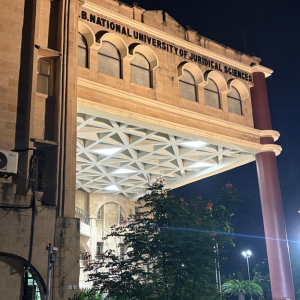
We got the chance to sit down with Tina Chakraborty, a first-year Ba.LL.B. (Hons.) student at West Bengal National University of Juridical Sciences (WBNUJS), and she had some truly wonderful things to share. Fresh into her journey at one of India’s most prestigious National Law Universities, Tina gives us an honest and heartfelt glimpse into what those first steps in law school actually feel like.
Think academics, new friendships, campus life, and everything in between — straight from someone who’s just getting started.
Whether you’re a CLAT aspirant, a curious parent, or simply someone who loves a good story, you’re going to enjoy this one.
- To begin with could you please briefly introduce yourself and share a bit about your journey so far.
Hello everyone! I am Tina Chakraborty, a first-year student at WBNUJS. My journey to law school began with my CLAT preparation at Clat Essentials, which was a truly transformative phase in my life. NUJS has always been my “dream law school,” and I am incredibly grateful to Rajneesh Sir for his guidance in helping me turn that dream into a reality. This past year at NUJS has been a thrilling rollercoaster ride, and I hope to share the insights I’ve gathered to help prospective students navigating a similar path.
🧑🎓 Life at Law School
- How would you describe your daily life at law school ?
To be honest, life here is hectic, but in a very rewarding way. While you often feel like you have a significant amount on your plate, you eventually learn to navigate the workload efficiently. Weekdays are typically packed with classes in the morning, followed by research readings and socializing in the evenings. Weekends are comparatively more relaxed, though they are usually punctuated by various campus events that often become the highlight of the week.
🍽️Food (Mess/Canteen)
- How is the food at your law school in terms of taste, variety, and hygiene?
The food provided is quite palatable, generally tasting above average with a commendable level of variety. The menu is updated monthly to ensure that seasonal fruits and vegetables are included. Hygiene standards are strictly maintained in the mess and allied dining areas.
- Are there good alternatives to mess food nearby (cafes, delivery options)?
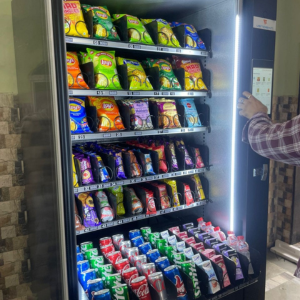
Since NUJS is located in the heart of Kolkata, students have access to an extensive range of delivery options. Additionally, the on-campus canteen and the popular “side gate” eateries are frequent haunts for students looking for a change of pace.
- How do students usually manage food when mess food isn’t good?
The canteen and side gate vendors are the primary “saviors” when the mess menu doesn’t appeal to someone. Many students also choose to order in or visit nearby restaurants and cafes. Of course, when all else fails, Maggi remains the ultimate reliable rescue.
- How is the water availability?
Coolers are conveniently located throughout the campus, including the mess, hostels, and the academic block.
🏡 Hostel Life
- What is the last entry time for hostels? How strict are the hostel rules regarding timings and permissions? Does one need their parent’s permission to go out of the campus
Ans: Official entry to the campus closes at 10:00 PM; however, the administration is reasonably understanding, and students are permitted entry after hours in case of necessity. While the rules are strict enough to ensure student safety, parental permission is generally not required for standard outings from the campus.
- How are the hostel facilities overall (rooms, cleanliness, Wi-Fi, common areas)?
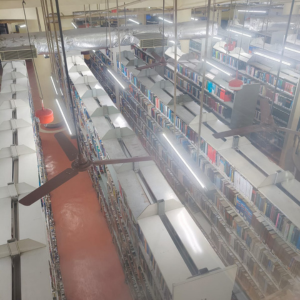
Ans: The hostel facilities are quite good. In the first year, female students are allotted air-conditioned dorms or staff quarters, while male students are assigned shared rooms. The campus is equipped with 24/7 Wi-Fi that performs reliably. Common areas such as the library, mess, and the “quad” serve as excellent hubs for socializing. Notably, the library offers specialized zones, including “dead-silence” areas for deep focus and discussion rooms for collaborative work.
- How is the hostel infrastructure? Are the rooms single, double or triple sharing? Is AC facility available? And the washrooms are shared by how many people?
Ans:The infrastructure is solid. First-year girls reside in AC dorms or quarters, while boys are in double-sharing rooms. While individual hostel rooms do not currently have AC, single-room occupancy becomes an option in the fourth or fifth year. Washrooms are available on every floor, with each cubicle being shared by an average of seven to eight students.
- What’s the social life like in hostels — are there events, gatherings, study groups?
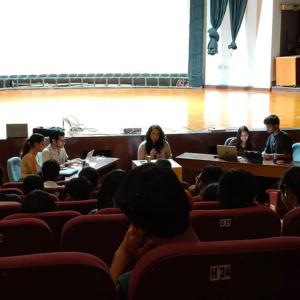
Ans: The social life at NUJS is exceptionally vibrant, primarily because it fosters a seamless interaction between juniors and seniors, allowing for significant peer-to-peer learning. The campus calendar is consistently filled with a diverse range of events, spanning rigorous academic engagements such as moots, ADR competitions, and guest lectures by eminent legal personalities to spirited extracurricular activities, including sports tournaments, cultural fests, and various committee initiatives.
📜 Rules and Regulations
- What are the major academic rules and regulations — especially regarding attendance and exams?
Ans: Attendance criteria are strictly enforced at NUJS. Students must maintain a mandatory 70% attendance record; failing to do so may lead to being debarred from the end-semester examinations. Academically, the semester is divided into a 40:60 ratio, where 40% of the grade comes from internal assessments and 60% from the final exams.
- How strict is the administration regarding discipline and code of conduct?
Ans:The administration is fairly strict regarding discipline to maintain the professional decorum of the institution.
- Are there specific dress codes for certain activities like moots or presentations?
Ans:Yes, specific dress codes apply for certain academic activities. Moot court competitions require full formal attire, while semi-formal clothing is usually sufficient for classroom presentations.
📝Academics: Internals, Assignments and Unit Tests
- How frequent are the internals, assignments, and UTs (Unit Tests)?
Ans: The frequency of assignments varies as different professors assign work throughout their specific modules. Institutionally, the 40-mark internal component is evaluated by the professors, leading up to the 60-mark end-semester examination
- Are assessments heavily weighted towards exams, projects, or continuous evaluation?
Ans:The weightage is distributed with 40 marks dedicated to internal assessments, which can take the form of projects, presentations, or research papers, and 60 marks reserved for the final written examination.
📚 Classes and Timings
- What is the daily class timing like?
Ans: Classes typically run from 9:30 AM to 4:00 PM.
- Are Saturdays working days at your law school?
Ans:No, Saturdays are generally not working days.
- How hectic is the weekly schedule?
Ans: The weekly schedule is actually quite manageable and chill. We have classes from Monday to Friday, which leaves ample time for other activities such as mooting and various competitions.
🎉 Semester Breaks
- When are the semester breaks scheduled? And how long are these semester breaks? Are breaks enough to take internships or refresh properly?
Ans: Internship breaks are scheduled during May-June and throughout the month of October. Additionally, there is a ten to fifteen day break in December following the conclusion of the monsoon semester. These breaks are perfectly timed to allow students to pursue internships and rejuvenate properly before the next term.
🌍 Diversity and National Representation
- How is the national representation at your law school — do students come from all over India? How inclusive and diverse is the campus culture?
Ans: The campus is incredibly diverse. Since it is a National Law University, we have students coming from all parts of the country, which creates a very inclusive and multicultural environment.
🛎️ Day 1: Registration and Admission
- What was the Day 1 experience like during hostel registration and college admission?
Ans: Personally, I found the Day 1 experience to be very smooth. The administration was helpful and guided us through every step of the way. However, due to the large number of incoming students, it can be a long process that may take five to six hours, so it is best to come prepared. As a pro tip, I highly recommend carrying at least 2x copies of every required document.
- Are there any important tips for a smooth admission/hostel registration process?
Ans: The most important tip is to carry duplicate copies of all your paperwork. If you find you need quick printouts, you can head to the library, which provides printing facilities. Overall, it is a very straightforward process.
⚖️ Moot Court Activities
- What is the culture around mooting at your college? Are the moot courts sponsored by the college?
Ans: NUJS has an amazing mooting culture. The internal “Intra-Moot” is an invaluable learning experience and is the mechanism through which students are allotted external moots. Students are also assigned moot mentors who are highly skilled and help you at every stage. It is worth noting that, unfortunately, most moots are not sponsored by the university.
- How early can a first-year student start participating in moots?
Ans: First-year students can begin participating in mooting activities as soon as the initial moot allocations are finalized.
- Are there internal selections for moots?
Ans: Yes, there is a structured internal selection process for all moots.
- Is there any special training or mentorship available for moots?
Ans: Yes, the Moot Court Society provides specialized mentorship by pairing students with experienced mooters.
🎯 Extracurriculars
- What extracurricular activities are available at your law school? Which activities would you recommend to a 1st year student?
Ans: There is a wide range of activities available, including mooting, ADR, various academic societies, inter-batch sports, and dance. I would strongly recommend that a first-year student try everything they can. The first year is the ideal time to explore your interests and simply have fun.
- How do extracurriculars help in career building or internships?
Ans: They play a major role in your professional growth. Firstly, they build immense self-confidence. For example, mooting refines your legal research, drafting, and public speaking skills, while ADR hones your abilities in crisis management and negotiation. These activities truly transform your character and look very impressive on the CV.
- Are there any limitations of participating in extracurriculars?
Ans: None at all. I encourage everyone to try whatever interests them without hesitation.
- How do you personally balance academics and extracurricular activities?
Ans:While it can get difficult at times, the college environment teaches you how to manage your time. You learn to prioritize your studies when necessary while still preparing for moots and ADR competitions. Eventually, everything falls into place.
👥 Committees
- What are the major committees and societies in your law school? Which committees should a first-year student definitely try to join?
Ans: We have an extensive list of societies, including the Cyber Committee, Nature Committee, SACJ, NUJS Law Review, SIBRL, IDG, LDS, MCS, ADR Society, IPLTS, Cultural Committee, WLS, Sports Committee, and Magazine Committee, among many others. For reference u can visit https://www.sjanujs.org/socities
- What is the process of getting into a committee? How competitive is the selection for these committees?
Ans: Committees usually roll out applications and conduct interviews. Selections are based on these interviews, and while some can be competitive, they are a great way to get involved.
🎊 Fest and Campus Life
- How vibrant is the cultural and sports scene at your law school?
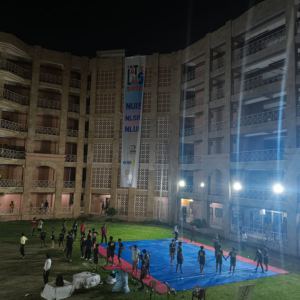
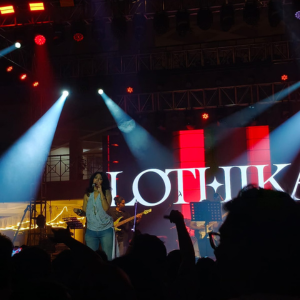
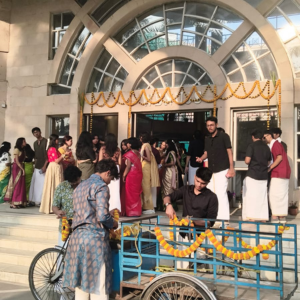
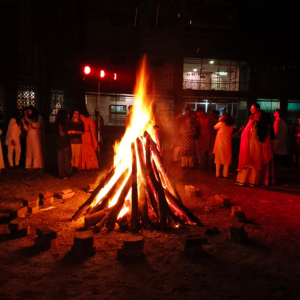
Ans: The cultural scene is fantastic. We host events like Dandiya Night, Lohri, NUJS Night, and inter-batch dance competitions and many more events, all of which are incredibly fun. The sports culture is equally strong; we conduct our own fest, Invicta, and participate in or host the Tri-Series. The inter-batch sports and quad games are also major highlights.
- What are the major college fests?
Ans: The primary fests are Invicta and Outlawed. I recommend checking out their social media pages to see the great work they do. The Tri-Series is also an amazing, highly competitive event to either participate in or spectate.
🏀 Sports Facilities
- What kind of sports facilities are available on campus? How active is the sports culture at your college?
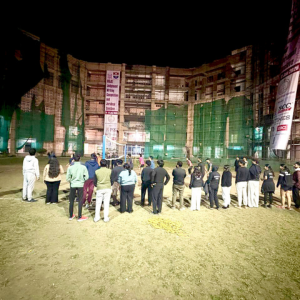
Ans: On campus, we have a “quad” ground and a dedicated basketball area. For major fests, the college rents out larger external venues, which works out well for the students.
- Are there any sports teams or tournaments students can participate in?
Ans: Invicta and the Tri-Series are the “must-do” tournaments for any sports enthusiast.
🎓 Class Representative (CR) Selection and Responsibilities
- How is the CR (Class Representative) selected?
Ans: The CR is chosen through a democratic election involving the entire batch.
- How much influence or say does a CR have regarding student concerns?
Ans: The CR acts primarily as a vital medium of communication between the students and the authorities.
- What are the main responsibilities of a CR?
Ans: Their main responsibility is to coordinate between professors and the student body to ensure academic and administrative tasks run smoothly.
🏛️ Student Union
- Is there a Student Union at your college?
Ans: Yes, we have the SJA, which stands for the Student Juridical Association.
- Can first-year students get involved with the Student Union?
Ans: Typically, first-year students do not get directly involved in the SJA.
- How active is the Student Union in addressing student issues or organizing events?
Ans: The SJA is very active and highly effective in addressing student concerns and organizing major campus events.
🧑💼 Key People in Administration
- Who are the key people in the administration that students should know about? (Dean, Registrar, Warden, etc.)
Ans: Students should be familiar with the Deans’ Council, which includes Arup Kumar Poddar, Sandeepa Bhatt, Lovely Dasgupta, Anirban Mazumdar, and Shameek Sen. Additionally, Mr. Raja Chakraborty serves as the Registrar.
- Whom should students approach for different issues like academic help, hostel problems, or disciplinary matters?
Ans: These details are explained more comprehensively during the orientation, as there are multiple specific steps and different personnel to approach depending on the nature of the issue.
- Is there any unwritten advice about how to approach professors or administration to get help more easily?
Ans: There isn’t really any “unwritten” secret; the best approach is simply to be professional and follow the established procedures.
🛠️ Internship and Placement Guidance
- How does the college support students in finding internships?
Ans: The college has a well-organized Recruitment and Placement Committee (RPC) that assists students in securing internship opportunities.
- What should a first-year law student do to land good internships? What types of internships are recommended during the first year?
Ans: I suggest applying well in advance and talking to seniors for guidance. For the first year, research-based or NGO internships are highly recommended.
- How strong is the placement cell at your college?
Ans: The placement cell is very well-established and has a strong track record.
- What kind of firms, companies, or organizations usually recruit from your campus?
Ans: We see recruitment from a wide variety of employers, including Tier 1 and Tier 2 law firms, as well as mid-sized firms and various corporate organizations.
❤️ College - Likes and Areas of Improvement
- According to you, what are the three biggest strengths of your college?
Ans: In my opinion, the three biggest strengths of NUJS are its supportive senior community, its expansive alumni base, and the way it encourages students to become truly independent.
- What do you like the most about your college?
Ans: What I love most is the senior-junior culture. The seniors treat the juniors like younger siblings and are always there to help, which is truly the best part of being here.
- Where do you think the college can improve?
Ans: While there is always room for improvement in infrastructure, it has actually become quite good recently and continues to move in the right direction.
Photo Gallery