

Scholarships/Financial Aid by Government for Law Students in India
Legal education in India is expensive. A five-year BA LLB programme at a National Law University can cost anywhere between ₹8 lakh and ₹15 lakh in total fees, and that figure climbs further when you add hostel, mess, and incidental expenses. For most Indian families, this is a significant financial burden — and yet a large number of law students remain entirely unaware of the government scholarship ecosystem that exists to ease exactly this burden.
This article is a comprehensive, ground-level guide to every major government scholarship scheme that a law student in India — whether at an NLU, a state law university, or a private institution — can access. It covers central government schemes, category-specific scholarships, schemes specific to NLU students, and a step-by-step guide to applying through the National Scholarship Portal (NSP). Whether you are a first-year student trying to fund your education or a senior student who missed these opportunities earlier, this guide is for you.
The National Scholarship Portal (NSP) — Your Single Gateway
Before diving into individual schemes, it is essential to understand the infrastructure through which most government scholarships are delivered: the National Scholarship Portal (NSP), accessible at scholarships.gov.in.
The NSP uses a One Time Registration (OTR) system — a unique 14-digit number issued based on your Aadhaar or Aadhaar Enrolment ID, applicable for your entire academic career. Scholarships
This means you register once, and use the same credentials to apply for and renew scholarships across different schemes and academic years. NSP services are also available at Common Service Centres (CSCs) if you lack digital access.
Key things to know about NSP:
- All payments are made via Direct Benefit Transfer (DBT) to your Aadhaar-linked bank account.
- Your institution must verify your application on the portal before it is processed. If your institution does not verify your form in time, your application will be rejected — so always follow up with your college’s scholarship/finance department after submitting.
- You can track your application status, correction messages, and disbursement details via your NSP dashboard.
- No student can hold two government-funded scholarships simultaneously. You can only avail of one government-funded scholarship at a time.
Central Government Schemes
This is the most widely applicable central government scholarship for law students from economically weaker families who have strong academic records.
What is it? The Central Sector Scheme of Scholarship (CSSS) is a flagship initiative by the Department of Higher Education, Ministry of Education, Government of India, aimed at providing financial assistance to meritorious students with a family income of less than ₹4.5 lakh per annum, to meet part of their day-to-day expenses while pursuing higher studies.
Who is eligible?
- Applicants must be among the top 20% of successful candidates in the relevant stream in their Class 12 board examinations.
- Annual family income must not exceed ₹4.5 lakh.
- Must be pursuing a regular undergraduate or postgraduate degree at a UGC/BCI-recognised institution. Distance education students are not eligible.
- The scholarship is available to students pursuing three, four, or five-year UG programmes, as well as two-year PG programmes — meaning the full five-year BA LLB and two-year LLM are both covered.
How much do you get? The scheme provides ₹12,000 to ₹20,000 per year to meritorious students from low-income families. For law students in years 4 and 5, the amount is ₹20,000 per annum.
Scale of the scheme: The annual target is 82,000 scholarships per year — 41,000 for boys and 41,000 for girls — divided amongst State Education Boards based on the state’s population in the age group of 18–25 years.
Renewal conditions: Students must maintain a minimum of 50% marks in annual exams and at least 75% attendance to renew the scholarship each year. Any complaints regarding indiscipline, criminal behaviour, or ragging will result in scholarship forfeiture.
Application: Via NSP at scholarships.gov.in. Annual deadline is typically October 31 each year.
This is arguably the most generous and most directly relevant government scholarship for Scheduled Caste students studying at NLUs.
What is it? The Central Sector Scheme of Top Class Scholarship for SC Students aims at promoting quality education among SC students by providing financial support for pursuing studies beyond Class 12. It operates in all institutions notified by the Ministry of Social Justice and Empowerment, including 20 National Law Universities and 2 other private institutions — ILS Law College and Symbiosis Law College in Pune.
Who is eligible? SC students with a total annual family income from all sources up to ₹8 lakh, having secured admission in a full-time prescribed course at any of the notified institutions, are eligible. Scholarships
How much do you get? The benefits include full tuition fees (up to ₹2 lakh per annum in private institutions), an academic allowance of ₹86,000 in the first year, ₹41,000 in subsequent years, and funds for laptops and stationery. A fixed annual amount of ₹5,000 is provided for books and stationery.
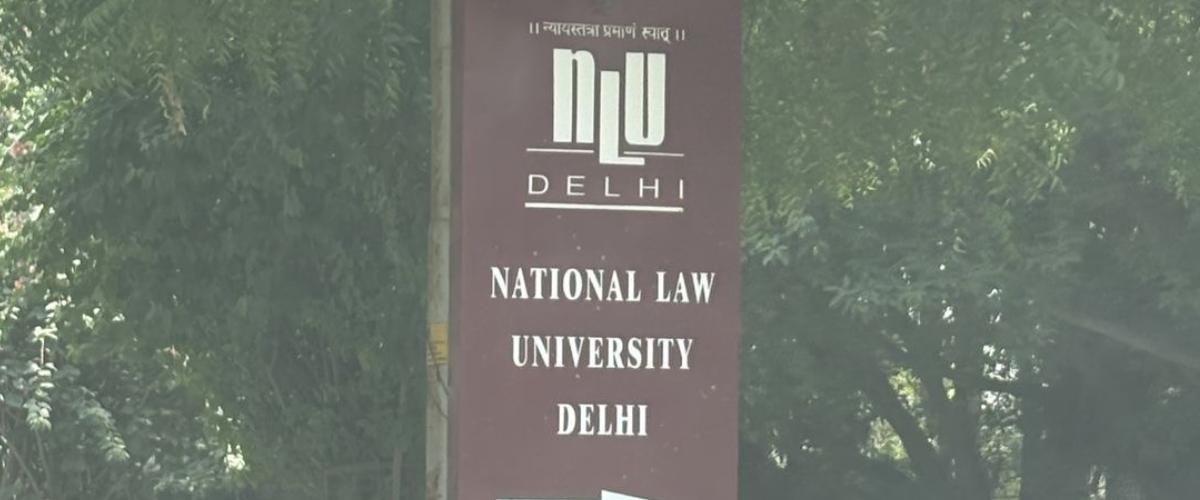
For NLU Delhi specifically, five scholarships per year have been allocated, covering tuition fees, books and stationery expenses, lodging, and one computer system.
Renewal: The scholarship can be renewed annually if the student clears all subjects in the previous academic year, continues studies in the same course and institution, and maintains the annual family income within the prescribed limit of ₹8 lakh. If a student changes institution, the scholarship is discontinued.
Slots for women: 30% of the total slots in each institution are reserved for eligible SC girl students, filled based on inter-se merit.
Application: Via NSP. Last date is typically October 31 each year.
This is a centrally sponsored scheme administered by the Ministry of Social Justice and Empowerment, and one of the most widely used government aid programmes for SC students at the postgraduate level.
What is it? The objective of the scheme is to appreciably increase the Gross Enrolment Ratio of SC students in higher education, with a focus on those from the poorest households, by providing financial assistance at the post-matriculation or post-secondary stage to enable them to complete their education. Department of Social Justice and Empowerment
Who is eligible? Students from SC communities pursuing higher education (including professional courses like law) at a recognised institution. Annual family income should generally not exceed ₹2.5 lakh.
How much do you get? Benefits include ₹230–₹1,200/month as maintenance allowance, full tuition fee reimbursement, book grants, and more. The exact amount depends on whether you are a hosteller or day scholar, and on your state’s implementation of the scheme.
Application: Via NSP or your state government’s scholarship portal. Deadlines vary by state and are typically between October and November each year.
What is it? The PM-YASASVI scholarship, launched by the Ministry of Social Justice and Empowerment, helps students from Other Backward Classes, Economically Backward Classes (EBC), and De-Notified Tribes (DNT) complete their education by covering tuition fees, hostel fees, and other academic expenses. Kotak 811
The Post-Matric sub-scheme under YASASVI is the most relevant for law students, as it covers higher education including professional degree programmes.
Who is eligible?
- Must belong to OBC, EBC, or DNT categories.
- Annual family income must not exceed ₹2.5 lakh from all sources.
- Must be enrolled in a regular, full-time recognised course. Distance learning is not covered.
- Students who have already completed one professional course (for example, LLB after B.Ed.) are not eligible. Kotak 811
How much do you get? The scheme covers tuition fee reimbursement and maintenance allowances, with amounts varying by course level and institution type. Funds are disbursed via DBT to your Aadhaar-linked bank account.
Application: Via NSP at scholarships.gov.in. Annual deadline is typically October 31.
Important note for law students: This scheme covers Classes 9 to 12 only, meaning it is not directly applicable during your law degree. However, it is included here because many law students benefited from it during school and should be aware of it for outreach and awareness writing. If you are writing for a broader audience that includes school students aspiring to law careers, this scheme is highly relevant.
What is it? The Begum Hazrat Mahal National Scholarship, formerly known as the Maulana Azad Scholarship, is a national-level scholarship for girl students belonging to minority communities — Muslim, Christian, Sikh, Buddhist, Jain, and Parsi religions — providing financial assistance of ₹10,000 to ₹12,000 to students in Classes 9 to 12.
Eligibility: Applicants must have secured at least 50% marks in the previous class, and the annual family income must not be more than ₹2 lakh from all sources.
Application: Via NSP. Typically opens in July-August and closes in October each year.
PM-Vidyalaxmi — Education Loans with Interest Subvention
his is not a scholarship but an education loan scheme that deserves special mention because many law students confuse loan schemes with grants. Importantly, it comes with meaningful interest relief.
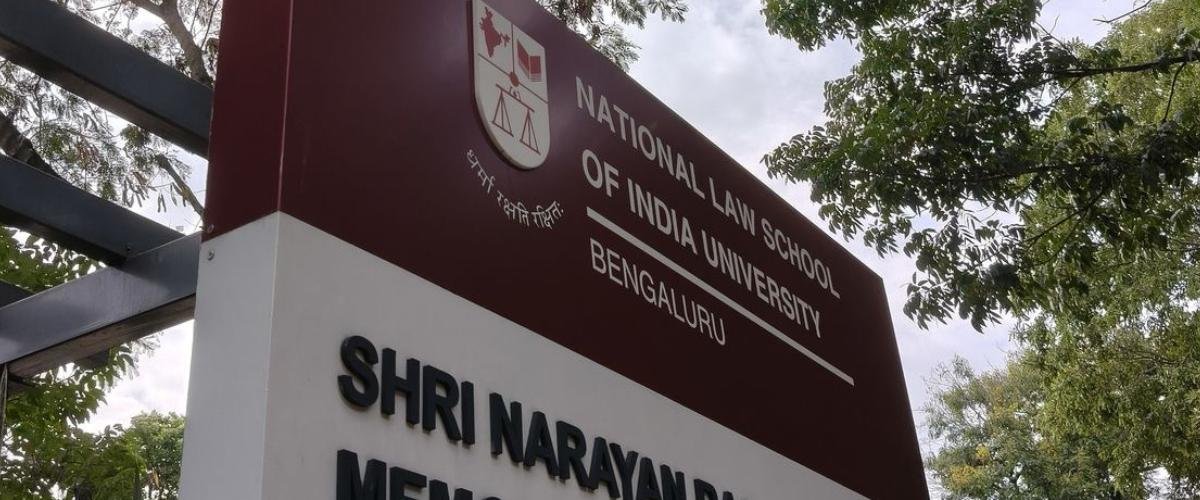
NLSIU Bangalore has been recognised by the Government of India under the PM-Vidyalaxmi Scheme as one of the leading higher educational institutions, making its students eligible to apply for collateral-free and guarantor-free education loans, including full interest subvention for students with a family income of up to ₹4.5 lakh and 3% interest subvention for students with a family income of up to ₹8 lakh.
Most NLUs are expected to be listed under this scheme. Apply via pmvidyalaxmi.co.in.
State Government Schemes
Beyond central schemes, every state government runs its own scholarship programmes that are tied to domicile. These are based on your permanent residence — your home state — not where your NLU is located.
Key points for law students:
- You apply to your home state’s scheme, not your NLU’s state’s scheme.
- Many state schemes are administered via dedicated state portals (e.g., UP Scholarship Portal, Karnataka Samaja Kalyana, Oasis Portal for West Bengal) in addition to or instead of NSP.
- Amounts vary significantly by state. Some states offer full fee reimbursement for SC/ST students at NLUs; others offer flat maintenance allowances.
Action point: On the NSP portal, after logging in, you can browse both central and state-level schemes applicable to your category. Always check your home state’s portal separately, as not all state schemes are listed on NSP.
Quick Reference Master Table
Scheme | Category | Income Limit | Amount | Portal | Typical Deadline |
|---|---|---|---|---|---|
CSSS (Merit-Cum-Means) | General/All | ≤ ₹4.5L p.a | ₹12,000–₹20,000/yr
| NSP | Oct 31 |
Top Class Education (SC)
| SC | ≤ ₹8L p.a. | Full fees + ₹86K allowance | NSP | Oct 31 |
Post-Matric SC (PMS-SC) | SC | ≤ ₹2.5L p.a.
| Full fees + maintenance
| NSP + State Portal
| Oct – Nov
|
PM-YASASVI (Post-Matric)
| OBC/EBC/DNT
| ≤ ₹2.5L p.a.
| Tuition + maintenance
| NSP
| Oct 31
|
Begum Hazrat Mahal
| Minority Girls (Class 9–12)
| ≤ ₹2L p.a.
| ₹10,000–₹12,000/yr
| NSP
| October
|
PM-Vidyalaxmi
| All (loan scheme)
| ≤ ₹8L p.a.
| Interest subvention
| pmvidyalaxmi.co.in
| Rolling
|
State Schemes | Varies | Varies | Varies | State Portal + NSP | Varies |
Documents You Will Need — A Master Checklist
Regardless of which scheme you apply to, keep these documents ready in digital form (PDF/JPEG, as specified on the portal):
- Aadhaar card
- Class 12 mark sheet and passing certificate
- Income certificate (issued by a competent authority — Tehsildar, SDM, or state-designated officer)
- Caste/community certificate (SC/ST/OBC/minority, as applicable)
- Admission proof / bonafide certificate from your NLU
- Bank passbook (account must be in your name, ideally Aadhaar-seeded)
- Passport-size photograph
- Previous year’s mark sheet (for renewals)
- Disability certificate (if applicable)
Step-by-Step: How to Apply on NSP
Step 1 — OTR Registration Visit scholarships.gov.in and complete your One Time Registration using your Aadhaar number. This generates your unique 14-digit OTR number. Download the NSP OTR App on your phone for face authentication to complete the process.
Step 2 — Log in and select your scheme Log in with your OTR credentials. Navigate to “Apply for Scholarship” and browse the list. Select the scheme most applicable to your category. You can only apply for one scheme at a time.
Step 3 — Fill the application Enter your personal, academic, bank, and income details accurately. Upload all required documents in the prescribed format. Review everything carefully — once submitted, most schemes do not allow edits.
Step 4 — Institute verification (CRITICAL) After submission, your application goes to your NLU’s scholarship/finance department for verification. This step is entirely dependent on your institution. If your institution does not verify your form before the cut-off date, your application will be rejected regardless of your eligibility. Follow up in person with your college’s nodal officer.
Step 5 — Track and receive Once verified, track your application status via your NSP dashboard. On approval, the amount is credited directly to your Aadhaar-linked bank account via DBT.
Common Mistakes Law Students Make — And How to Avoid Them
- Applying too late. NSP schemes typically open in July-August and close by October 31. Many students discover these schemes only after deadlines have passed. Set a calendar reminder for August 1 every year.
- Not following up on institute verification. This is the single most common reason for rejection. After submitting your application, email or physically visit your NLU’s scholarship cell and confirm they have received and verified your application on NSP.
- Holding two government scholarships. This will lead to disqualification. If you receive one scheme, you cannot simultaneously apply to another central or state government scholarship.
- Income certificate from the wrong authority. Many applications are rejected because the income certificate is not issued by the designated competent authority in your state. Check the specific scheme’s guidelines for the list of accepted certifying authorities.
- Not maintaining academic requirements for renewal. Most schemes require a minimum of 50% marks and 75% attendance annually. A single failed subject in a semester can discontinue your scholarship. Always check renewal conditions specific to your scheme.
About the author

Oyishee Bose is a driven student whose journey is defined by excellence in academics, leadership, and communication. Securing West Bengal Rank 39 in CLAT 2026, she is set to join one of India’s prestigious National Law Universities — RGNUL, Patiala.
Shaped by a passion for law, leadership, and the written word, she has held roles as Student Council member and House Captain, competed in inter-school debates and speech competitions, and contributed to her school magazine as part of the editorial team. Her most defining achievement came as Editor-in-Chief of the International Press Corps at Ashok Hall IntraMUN 2024, where she led a team of student journalists across press reportage, editorial decision-making, and committee coverage. She further honed her legal instincts through moot court, earning a Special Mention from the judges for her argumentation and reasoning.
At CLAT Essentials, Oyishee serves as a Website Manager, Content Facilitator, Mentor, and Prep Assessor & Guide, spearheading the platform’s content and operations, crafting and curating study materials, and walking aspirants through every step of their preparation journey, from targeted doubt sessions to personalised progress assessments, bringing both her academic insight and editorial voice to support the next wave of law school hopefuls.
Disclaimer: The scholarship information provided in this article is accurate to the best of our knowledge at the time of publication. Eligibility criteria, amounts, and deadlines are subject to change. Readers are advised to verify all details directly with the concerned institution or official portal before applying.